
What are stretch marks?
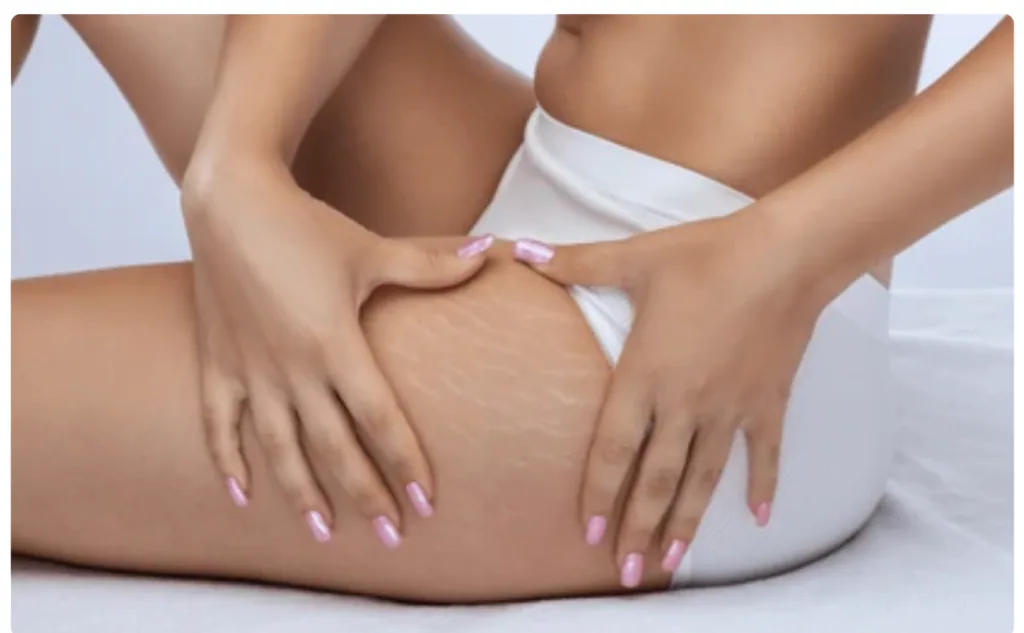
Stretch marks form when your skin undergoes rapid stretching or shrinking. This sudden change disrupts the production of two key proteins in your skin: elastin and collagen.
- Elastin: This protein gives your skin its elasticity, allowing it to stretch and bounce back.
- Collagen: This protein provides structure and support to your skin.
Here's a breakdown of the process:
- Rapid Skin Changes: When your skin is stretched quickly, the elastin and collagen fibers break down. This can happen due to various factors like pregnancy, weight gain/loss, puberty growth spurts, or bodybuilding.
- Disrupted Production: The sudden stretching disrupts the normal production of elastin and collagen. This can lead to a shortage of these essential proteins in the affected area.
- Scarring: As the skin heals from the stretching, it tries to repair the damage. However, due to the lack of enough elastin and collagen, scar tissue forms in the stretched areas. This scar tissue appears as indented lines or streaks on the skin's surface, which are the stretch marks.
Here are some additional factors that can influence the development of stretch marks:
- Genetics: If your parents or close relatives have stretch marks, you're more likely to get them.
- Cortisol Levels: High levels of the stress hormone cortisol can weaken skin fibers, making them more likely to tear during rapid stretching.
- Medications: Certain medications, like corticosteroids, can also thin the skin and raise the risk of stretch marks.
While stretch marks are a common concern, they are generally harmless. However, if you're concerned about their appearance or have any questions, consult our dermatology, Dr. Parth Patel.
How do you treat stretch marks?
Stretch marks are a form of scarring that develop when skin rapidly stretches or shrinks. While there's no guaranteed way to completely eliminate them, several approaches can help improve their appearance.
Over-the-counter options (limited effectiveness)
- Moisturizers: While not proven to directly reduce stretch marks, keeping your skin well-hydrated can improve overall skin health. Look for fragrance-free moisturizers.
- Hyaluronic acid creams: This ingredient can improve skin hydration, potentially giving stretch marks a less noticeable appearance.
Prescription options (better results)
- Tretinoin cream (prescription required): This retinoid cream helps rebuild collagen in the skin, potentially making newer stretch marks less visible. It can irritate the skin, and needs proper guidance to use, so consultation with our dermatologist is recommended.
Dermatological procedures (most effective)
The most effective options require a dermatologist.
Laser therapy
Different lasers target stretch marks. Vascular lasers can address redness in newer marks, while CO2 Ablative Lasers and Fraxel® Non-Ablative Lasers can be used to improve older white stretch marks.
Microneedling
Tiny needles create controlled skin punctures, triggering collagen production and potentially improving stretch mark appearance.
These remove the outer layer of skin, encouraging new cell growth and potentially minimizing stretch marks.
It's important to consult our cosmetic dermatologist and surgeon, Dr. Parth Patel, to discuss the best course of action for treating your stretch marks. He can assess your specific situation and recommend the most suitable options.