
What is a Medical Grade Chemical Peel?
Conditions Treated with Chemical Peels
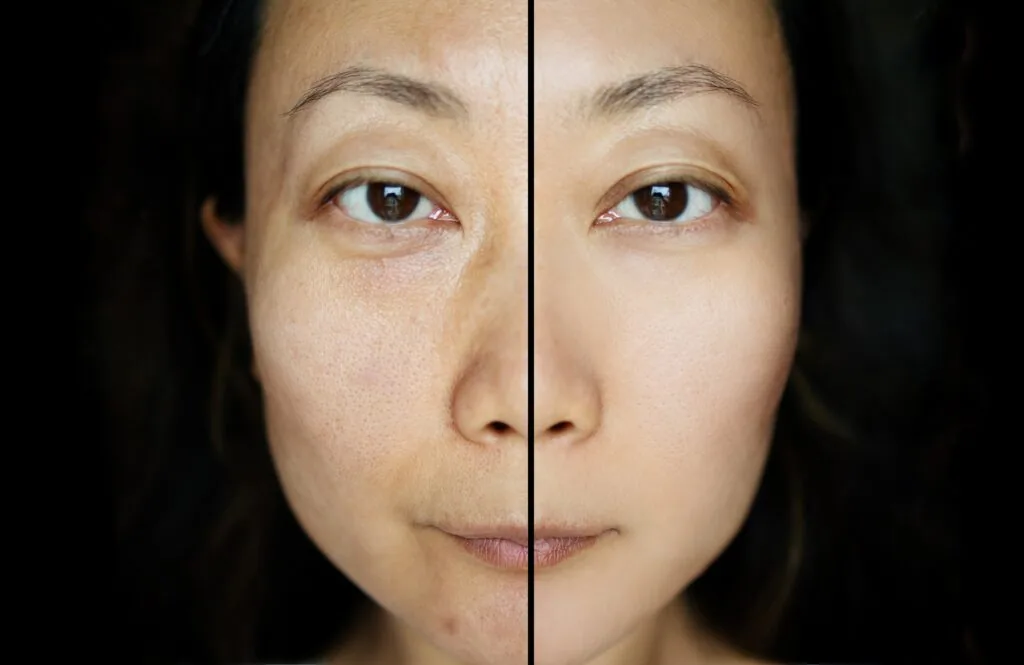
Chemical peels can be used to treat a variety of skin concerns, including:
- Fine lines and wrinkles
- Sun damage
- Uneven skin tone and texture
- Acne and acne scars
- Age spots and freckles
- Melasma (patches of darker skin)
There are different types of chemical peels available, ranging from superficial peels, which only remove the outer layer of skin, to deeper peels, which go deeper into the skin layers. The type of peel recommended will depend on the person’s skin type, concerns, and desired outcome. It is essential to consult with a board certified dermatologist such as Dr. Parth Patel before having a chemical peel to find the best option and to make sure it is safe and effective.
What Happens During a Chemical Peel?
During a chemical peel, the procedure typically follows these general steps:
1. Consultation
Before the procedure, you will have a consultation with Dr. Parth Patel to discuss your skin concerns, medical history, and goals for treatment. This is also a chance for the provider to assess your skin and decide the right type and strength of peel for your skin type and concerns.
2. Preparation
Before the peel, your skin will be cleansed to remove any makeup, oils, or debris. Some providers may also apply a pre-peel solution to degrease the skin and help the peel solution absorb better.
3. Application of Peel Solution
The chemical peel solution is then applied to the skin. The type and strength of the solution will depend on the specific peel being done and your skin’s needs. The solution may contain various acids such as Glycolic Acid, Mandelic Acid, Phenol, Salicylic Acid, or Trichloroacetic Acid (TCA).
4. Monitoring
During the peel application, our team will watch your skin’s reaction to make sure that the peel is progressing properly and not causing any unwanted reactions.
5. Neutralization (if Necessary)
Some peels require neutralization with a solution to stop the chemical reaction and prevent over exfoliation. Not all peels require neutralization, as some are self-neutralizing.
6. Post-Peel Care
After the peel solution has been on the skin for the right amount of time, it will either be neutralized or left on the skin to self-neutralize. Our team will then apply a soothing or calming product to the skin, such as a moisturizer or soothing mask.
7. Follow-Up
Depending on the type of peel and your skin’s response, you may need multiple peel sessions spaced out over several weeks to get the best results. Our team will schedule follow-up appointments to watch your progress and adjust the treatment plan as needed.
It is essential to follow our team’s instructions carefully both during and after the peel to get the best possible outcome and reduce the risk of complications.