
What is Granuloma Annulare?
Granuloma annulare is a common, usually self-limiting skin condition with either a localized or generalized course.
Around 70% of patients with granuloma annulare are young adults, up to around 30 years old. Children up to 15 years old make up around 40% of patients. Even though young people are the vast majority of those affected, an elderly person can also develop granuloma annulare. The extensive form of this condition is more commonly seen alongside diabetes mellitus, hyperlipidaemia, or HIV infection.
What Causes Granuloma Annulare?
The exact cause of granuloma annulare is unknown. Possible triggers include an autoimmune disease, viral infection, sun exposure, or a response to trauma.
Common Signs & Symptoms
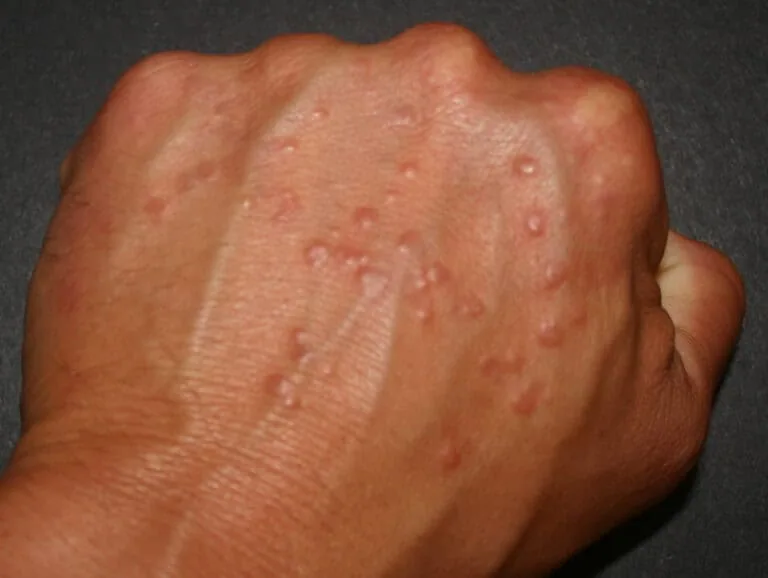
The disease begins as a skin-colored, asymptomatic papule with a lightened center. Over time, multiple skin-colored, pink, or purple papules form one or many ring-shaped lesions on the skin. Granuloma annulare can form in an oval or irregular shape, usually growing to a diameter of around 2 inches. The lesions most often affect the sides or backs of the hands and the ankles, including the areas above small joints. In 50% of patients, they last for up to 2 years. In about 40% of adults, granuloma annulare comes back in the same location. Rarely, predisposed patients may develop a generalized form. In that case, multiple ring-forming papules appear in many body areas. Granuloma annulare can also affect the skin folds of the trunk, like the armpits or the groin.
Granuloma Annulare Treatment Options
Pharmacological Therapy
Often, no treatment is required for granuloma annulare as it frequently goes away on its own, especially if there is only one lesion. If granuloma annulare becomes bothersome, or is more widespread, some patients may opt for treatment. Typically, either topical or intralesional steroids are used, including triamcinolone, clobetasol, fluticasone, and/or mometasone. The strength of topical steroids can be boosted with occlusion, while intralesional steroids are injected into the rim of a ring-shaped lesion. PS Dermatology will provide you with a personalized pharmacological treatment plan if needed.
Phototherapy
Another effective option in the treatment of granuloma annulare, especially when the lesions are numerous or generalized, is phototherapy. In this case, narrowband UVB radiation is usually used. It has a wavelength of 311–312 nm, which has been proven very successful at reducing the appearance of various skin conditions. It is non-invasive and can be safely repeated. PS Dermatology will individually adjust the phototherapy parameters for the best possible results.