
What is an Atypical Nevus?
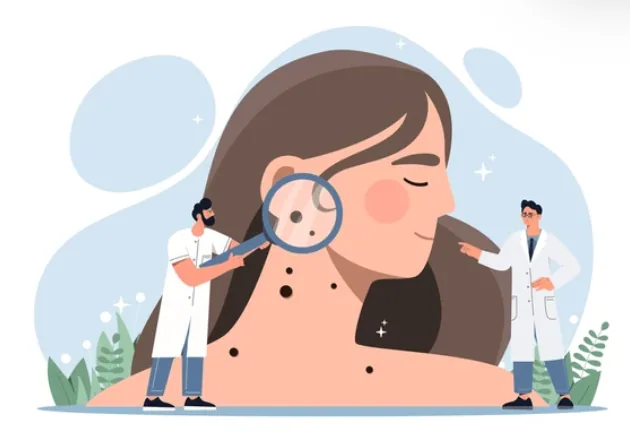
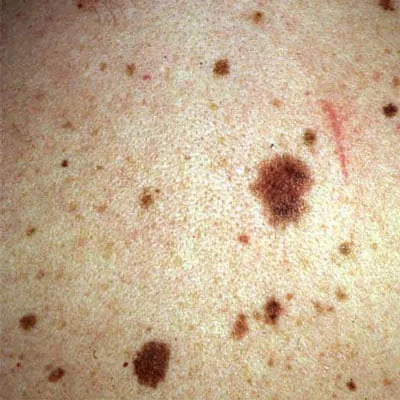
Atypical nevus is an unusual looking mole with irregular features when viewed under a microscope. It is commonly called Dysplastic Nevus or Atypical mole. These moles are not cancerous but need to be watched closely. This is because people with these moles have a higher risk of developing Melanoma – a dangerous skin cancer, somewhere else on their body.
Atypical nevus can appear anywhere on the body, so it is very important to have thorough skin exams looking at every square inch of skin surface area. Look out for changes in the appearance of moles on your skin and call your dermatologist’s attention to any changes (growth, bleeding, asymmetry, itching, pain).
To spot an atypical nevus on your skin, look for the following features when doing a self-examination: a size > 6mm in diameter, irregular borders, an unusual shape, different colors of the flat and bumpy parts, usually pink, brown and black. Unfortunately, these features overlap with melanoma and it is important to have a professional examine any new or concerning lesions to determine what they are.
How Common is Atypical Nevus?
The United States population has about a 10% rate of atypical nevi. However, a more accurate estimate is between 2 and 8 out of every 100 young, fair-skinned adults. According to the results of a study on dysplastic nevi carried out in families, patients with this condition have a higher risk of melanoma. The risk gets even higher if there is a personal or family history of melanoma, or if numerous family members are affected. Increased sun exposure also results in an increase in nevus development, although some nevi develop in sun-protected sites, like between the toes. Some genetic syndromes have a predisposition to melanoma, breast cancer, pancreatic cancer, mesothelioma, and others, so it is important to give your PS Dermatology and Surgery team an accurate family history. The result shows that “the higher the number of dysplastic nevi, the greater the chances of having melanoma.”