

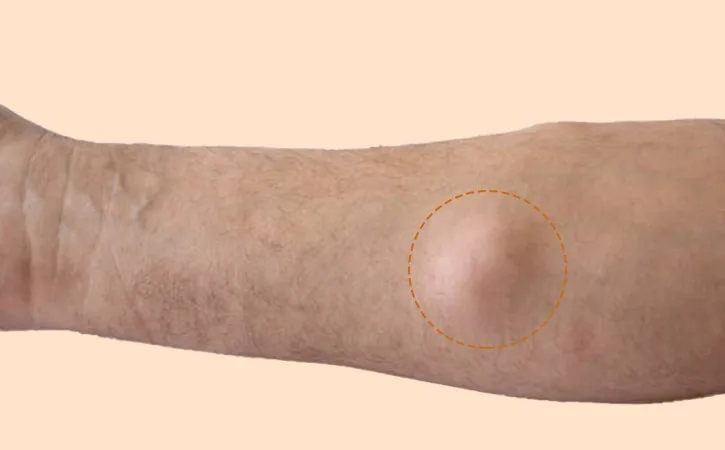
What is a Lipoma?
A lipoma is a benign (non-cancerous) tumor made up of fat cells. Lipomas are derived from the subcutaneous tissue, the layer of fatty tissue within the skin. This tumor grows slowly, and most are not bothersome. Lipomas are very common in the general population, and are found mostly in middle-aged adults, though they can occur at all ages. Lipomas are found in both sexes equally.
What Causes a Lipoma?
The exact cause of lipomas is unknown. However, lipomas have a genetic predilection, so they often occur in those with a positive family history. Sudden injury to a body part can trigger spontaneous cell growth, resulting in a trauma-induced lipoma.
Signs and Symptoms
As lipomas grow very slowly over several years, they usually develop unnoticed until they reach a larger size. Most often, they affect the neck, shoulders, arms, and trunk, but can appear anywhere on the body where subcutaneous fat tissue is present. They are convex, above the surface of the skin, often dome- or egg-shaped, with a soft, smooth, even doughy feel. Since they consist of subcutaneous lipids (fats), they are easily moved under the skin with your fingers. The skin surface above them stays unchanged. They do not cause any systemic symptoms, like fever or chills, but some localized pain can eventually be felt when applying lots of pressure.
How Do You Treat a Lipoma?
Many lipomas need no treatment. When one does need to come out, Dr. Patel removes it here in the office: the area is numbed with lidocaine, and you stay awake the whole time.
Because lipomas sit under the skin, they are not always easy to diagnose just by looking. They have a characteristic feel, and if Dr. Patel is unsure he may order an ultrasound or a CT scan first. He has removed lipomas from the scalp, face, neck, arms, and legs, from small ones to some the size of a baseball. Some insurance plans cover in-office removal and some do not, so coverage is decided case by case.