

Sun Protection
Sun Protection for Children: Skin-Safe Habits in Bridgewater, NJ
Quick answer: Sun protection for children means applying a broad-spectrum, water-resistant sunscreen rated SPF 30 or higher, reapplying every two hours, and layering UPF clothing, wide-brimmed hats, and shade between 10am and 4pm. Babies under 6 months should stay out of direct sun and rely on shade and clothing instead of sunscreen.
Sun protection for children is one of the most valuable long-term investments you can make in your child's health. Most lifetime ultraviolet (UV) exposure happens before age 18, and habits formed on the soccer fields and riverside parks of Central New Jersey tend to last a lifetime. At our Bridgewater practice, we help families across Somerset, Hunterdon, and Middlesex counties understand how to keep young skin safe without missing out on outdoor fun. This guide walks through practical, everyday steps you can start using today.
Before You Start: Why Sun Protection for Children Matters
Roughly a quarter of a person's lifetime sun exposure happens before age 18, and childhood is when the skin is most vulnerable to lasting UV damage. Just five or more blistering sunburns between ages 15 and 20 can roughly double the lifetime risk of melanoma. Put plainly: a single scorching Saturday at Duke Island Park or a Little League tournament in Somerset can leave a mark that shows up decades later, long after the redness fades.
Key takeaway: Consistent childhood sun habits are a cornerstone of children skin cancer prevention, and small daily steps add up over the years.
How UVA and UVB rays affect a child's skin
Sunlight contains two main types of harmful rays that reach the skin:
- UVA rays penetrate deeply and contribute to long-term aging and DNA changes.
- UVB rays are the primary cause of sunburn and play a major role in skin cancer development.
According to the CDC, UV exposure adds up over time, and children's thinner skin can be especially vulnerable. Broad-spectrum protection guards against both UVA and UVB rays.
Balancing vitamin D and skin cancer risk reduction
A common concern I hear in the exam room is that sunscreen will block a child's vitamin D. In practice, most children reach adequate vitamin D through diet, brief incidental sun exposure, and, when a pediatrician recommends it, a supplement. Sunburn is never a requirement for healthy vitamin D levels. Ask your child's doctor about vitamin D and sun exposure if you have concerns, because skin cancer risk reduction and good nutrition can coexist comfortably.
Schedule Your Consultation Today
Step 1: Choose the Right Kids Sunscreen
Choose a broad-spectrum, water-resistant sunscreen rated SPF 30 or higher, and consider mineral formulas for the youngest children or those with sensitive skin. The right product is one your child will actually tolerate and wear consistently.
Key takeaway: At PS Dermatology and Surgery in Bridgewater, NJ, we generally recommend broad-spectrum, water-resistant SPF 30 or higher, with mineral options for sensitive skin.
What SPF and broad-spectrum protection mean
SPF (Sun Protection Factor) measures protection against UVB rays. SPF 30 blocks roughly 97 percent of UVB when applied correctly. "Broad-spectrum" means the product also defends against UVA rays. Choosing an effective skin cancer news strategy starts with checking for both features on the label, along with water resistance for active days.
Mineral vs chemical sunscreen for sensitive skin
| Feature | Mineral (Physical) | Chemical |
|---|---|---|
| Active ingredients | Zinc oxide, titanium dioxide | Avobenzone, octinoxate, others |
| How it works | Sits on skin, reflects UV | Absorbs UV, converts to heat |
| Best for | Sensitive or very young skin | Older kids who dislike white cast |
| Onset | Protects immediately | Needs ~15 minutes to activate |
Mineral options are often gentler for reactive skin. Discuss the right choice with Dr. Patel if your child has eczema or known allergies.
Patch testing before full use
Before applying a new product widely, dab a small amount on the inner forearm and wait 24 hours. If redness, itching, or irritation appears, try a different formula. A 7-year-old can typically use the same broad-spectrum product as older family members, though many parents prefer a dedicated gentle formula.
Step 2: Apply and Reapply Sunscreen Correctly
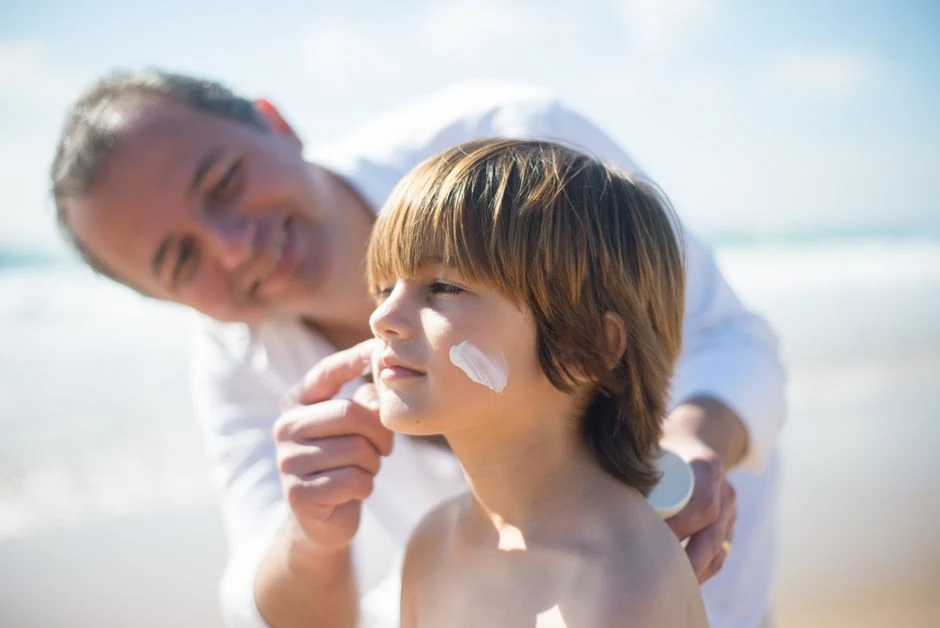
Apply sunscreen generously about 15 minutes before going outside, and reapply every 2 hours or immediately after swimming or heavy sweating. Under-application is one of the most common reasons protection fails.
Key takeaway: Even the best product underperforms when applied too thinly, which is part of the answer to does sunscreen prevent skin cancer?
How much to apply and where
Most families use less than half of what they need. Aim for about one ounce, a full shot glass, to cover an older child head to toe, and roughly a teaspoon for the face and neck alone. For younger kids, a nickel-sized dab per arm or leg is a useful rule of thumb. Rub it in fully, then hit the spots people routinely skip:
- Ears and the back of the neck
- Tops of the feet and hands
- The scalp part line and hairline
- Around the eyes (use a stick formula for control)
Lay down that first coat indoors, before your kids sprint into the water at Colonial Park's spray ground or line up for a game at Somerset County's fields.
Reapplying after swimming and sweating
Water-resistant is not waterproof; U.S. labels max out at 80 minutes of water resistance. Reapply after toweling off, after swimming, and after heavy sweating, even when two hours have not passed. Stash a backup tube in the pool bag and one in the car so a missed reapplication never becomes a burned back seat by dinnertime. Check with Dr. Patel if your child's skin reacts to frequent application.
Step 3: Add Clothing, Shade, and Timing
Layer sunscreen with UPF clothing, a wide-brimmed hat, sunglasses with UV protection, and shade during peak hours from 10am to 4pm when UV is strongest. Physical barriers reduce how much sunscreen you have to rely on alone.
Key takeaway: Combining shade, protective clothing, and timing offers stronger sun safety for kids than sunscreen by itself.
Protective clothing, hats, and sunglasses
- UPF clothing: Tightly woven or rated fabric blocks UV even when wet.
- Wide-brimmed hat: Shields the face, ears, and neck.
- Sunglasses with UV protection: Guard developing eyes from UV damage.
Using the UV index and shade during peak hours
Check the daily UV index before outdoor plans. When the index is high, plan playtime for morning or late afternoon and seek shade midday. The "shadow rule" helps: if a shadow is shorter than the child, UV is intense. These habits matter for families enjoying trails and fields across Somerset and Hunterdon counties.

Step 4: Protect Babies and Treat Sunburn Safely
Keep babies under 6 months out of direct sun, relying on shade and clothing rather than sunscreen, and soothe any sunburn with cool compresses and gentle moisturizer. Infant skin is highly sensitive to both UV and topical products.
Key takeaway: The American Academy of Pediatrics advises shade and protective clothing as the primary tools for infants under 6 months.
Sun protection for babies under 6 months
For the youngest infants, prioritize stroller canopies, lightweight long-sleeve clothing, and staying out of direct midday sun. If shade is unavailable, a minimal amount of mineral sunscreen on small exposed areas may be used, ideally after checking with your pediatrician.
Soothing sunburn and when to call a doctor
For mild sunburn, common comfort measures include cool compresses, fragrance-free moisturizer, and extra fluids. Seek medical care promptly if your child has:
- Blistering over a large area
- Fever, chills, or signs of dehydration
- Severe pain or lethargy
Contact your child's doctor for any concerning sunburn, especially in infants.
Next Steps: Making Skin-Safe Habits Stick
Turn these steps into lasting routines by modeling sun-safe behavior yourself, keeping sunscreen accessible, and periodically checking your child's skin for new or changing moles. Consistency is what reduces lifelong risk.
Key takeaway: Families who make sun protection automatic build the strongest foundation for long-term skin health.
Building daily routines the whole family follows
Children copy what they see. Apply sunscreen alongside your kids, store hats by the door, and pack a sun kit for outings. When protection is a shared family habit, it feels normal rather than optional.
Monitoring skin and knowing when to seek expert help
Watch for moles that change in size, shape, or color. Our team also supports families managing higher-risk situations, including guidance on sun protection after skin cancer. If you have questions about a spot or want personalized advice, our experts are happy to talk it through.
If you would like to understand your family's options, the dermatology and dermatologic surgery specialists at PS Dermatology and Surgery in Bridgewater, NJ offer education and screenings for patients throughout Central New Jersey. A short conversation can help you feel confident about your child's sun habits.
Schedule Your Appointment Today
Sources
Frequently Asked Questions
At what age should sun protection for children begin?
Sun protection should begin in infancy, though sunscreen is generally recommended only after 6 months of age. For younger babies, prioritize shade, protective clothing, and hats. Once children are older, daily broad-spectrum habits help guard vulnerable skin. Talk to your doctor about the safest approach for your child's age.
How much sun exposure do children get before age 18?
Roughly a quarter of a person's lifetime sun exposure happens before age 18, making childhood a critical window for prevention. Children's thinner skin is especially vulnerable to lasting UV damage. Research suggests that just five or more blistering sunburns between ages 15 and 20 may roughly double lifetime melanoma risk.
What is the difference between UVA and UVB rays?
UVA rays penetrate deeply and contribute to long-term skin aging and DNA changes, while UVB rays are the primary cause of sunburn and play a major role in skin cancer development. Broad-spectrum sunscreen guards against both. According to the CDC, UV exposure adds up over time in children's vulnerable skin.
Does sunscreen block a child's vitamin D?
Sunscreen generally does not cause vitamin D deficiency, as most children reach adequate levels through diet and everyday incidental sun exposure. You do not need to skip sun protection to support vitamin D. If you have concerns about your child's levels, talk to your doctor about supplementation options.
How can I protect my child from the sun during outdoor activities?
Protect children by combining broad-spectrum sunscreen, protective clothing, wide-brimmed hats, and sunglasses, plus seeking shade during peak hours. Reapply sunscreen every two hours and after swimming or sweating. Building these consistent habits early, whether at soccer fields or parks, helps establish lifelong skin-safe routines.
Can a 7 year old use adult sunscreen?
A 7-year-old can generally use broad-spectrum sunscreen formulated for adults, as long as it offers SPF 30 or higher and suits their skin. Some families prefer mineral-based formulas for sensitive skin. If your child has allergies or reactions, consult Dr. Patel before choosing a product.
What is the best type of sunscreen for children?
The best sunscreen for children is broad-spectrum, water-resistant, and SPF 30 or higher. Mineral-based formulas containing zinc oxide or titanium dioxide are often gentler on sensitive young skin. Apply generously and reapply regularly. For children with specific skin concerns, talk to your dermatologist about suitable options.
Ready to talk with a dermatologist?
Schedule a visit with our team at PS Dermatology and Surgery in Bridgewater, NJ - serving patients throughout Central New Jersey.