
Understanding Actinic Keratosis (Sun Spots)
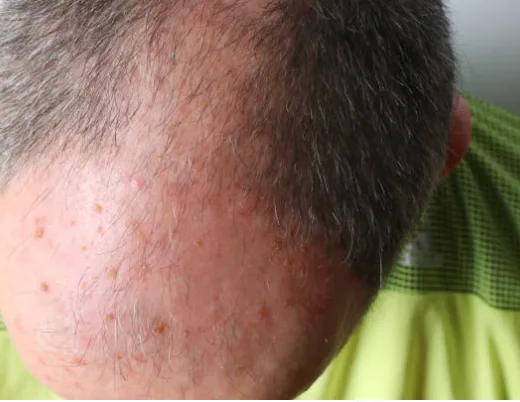
Actinic keratoses, also known as Sun Spots or AKs, are some of the most common lesions found during skin exams, and are often referred to as ‘pre-cancers’. They are caused by ultraviolet (UV) light – found in both natural sunlight and tanning bed lamps.
The estimated rate of an AK turning into skin cancer ranges from less than 1% to well over 10%. Even though that rate is low, AKs can still turn into skin cancer, and the general recommendation is to treat them rather than just monitor them.
Treatment Options for Actinic Keratosis
Topical Treatments: Done at Home
5-Fluorouracil (5-FU) / Calcipotriene
A chemotherapy / Vitamin D combination that destroys AK cells.
Imiquimod
An immune response modifier that helps the body’s immune system fight AK cells.
Tirbanibulin
Microtubule inhibitor that disrupts cell growth in AK cells.
Diclofenac Gel
A nonsteroidal anti-inflammatory drug (NSAID) that can reduce inflammation and AKs.
With all topical treatments you have to consider:
Common side effects: redness, inflammation, scaling, mild discomfort.
Less common: skin discoloration, scarring.
In-Office Procedures: Performed by the Dermatologist
Freezing AKs with liquid nitrogen.
Applying a photosensitizing solution to the skin and then exposing it to a specific type of light.
Applying a chemical solution to remove the top layers of damaged skin.
Laser Resurfacing
Using a laser to remove the top layers of skin.
With all in-office procedures you have to consider:
Common side effects: redness, inflammation, scaling, mild discomfort.
Less common: skin discoloration, scarring.
Important: Any AK treatment requires strict sun avoidance after the procedure for at least a few days.
Sun Protection Basics
Sun protection is essential to prevent AKs and reduce the risk of skin cancer:
- Apply mineral sunscreen with an SPF of 30 or higher daily.
- Seek shade, especially during peak sun hours (10 a.m. to 4 p.m.).
- Wear protective clothing, including a wide-brimmed hat and sunglasses.
- Avoid indoor tanning.