
What is Atopic Dermatitis (Eczema)?
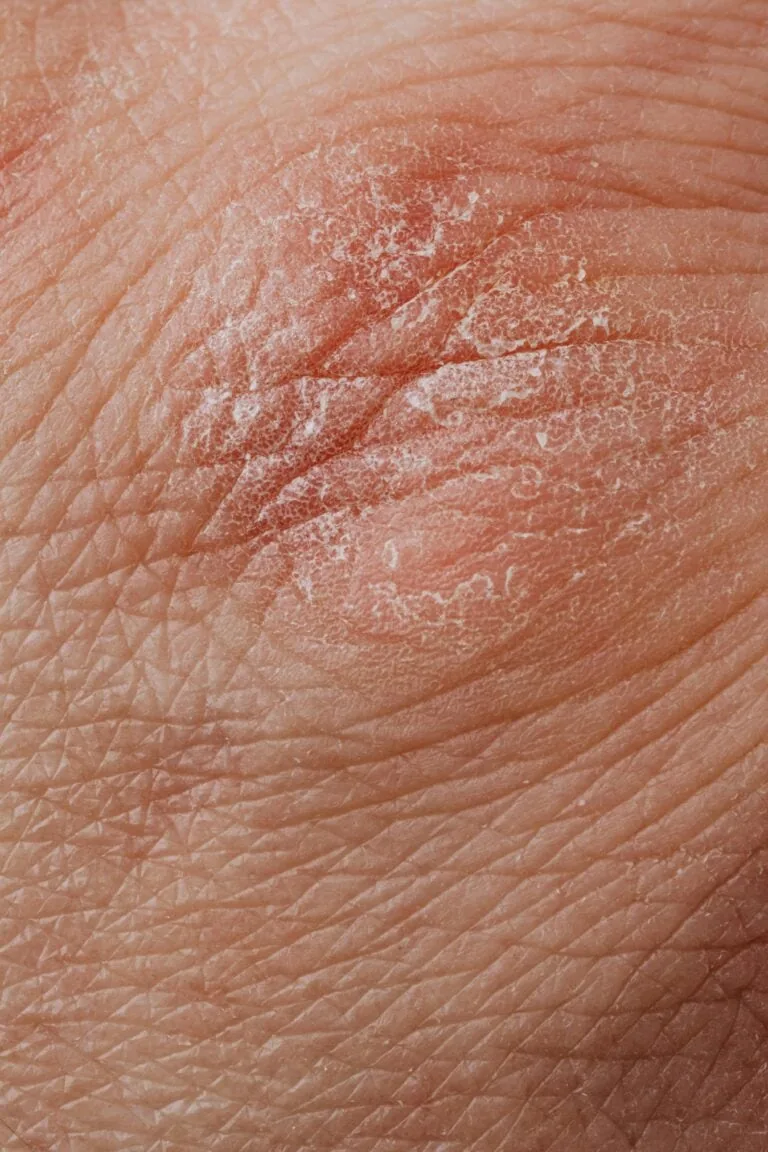
Atopic dermatitis (or ‘eczema’) is a very common and sometimes hard to treat skin condition – especially in children.
Perhaps the easiest way to describe eczema is that it is like ‘hay fever in the skin’. Just as some people are prone to hay fever and get itchy, watery eyes and a runny nose when the pollen is blooming, those with eczema may get patches of itchy, red skin when exposed to any number of triggering factors. These ‘triggers’ can be allergens (like pollen, pets, or food) or they can be non-allergens (like dry air in the wintertime or even just scratchy, irritating fabrics).
The good news is that most patients with eczema will have very brief flares which are easily controlled by using the right medications as needed. Also, most younger patients eventually seem to ‘outgrow’ eczema as their skin simply gets used to the ‘triggers’.
Topical steroid creams are the most common medications used for eczema flares. There are other ‘non-steroid’ creams and ointments available, and antihistamines (like Benadryl® or Zyrtec®) are sometimes helpful as well. Allergens are more likely to be a factor in patients who have significant eczema which has proven very hard to control. When we see a patient whose history suggests allergens playing a role, we may consider allergy testing. Some of this testing can be done in our office, while others will require a referral to an allergist.
With regard to general skin care, it is important to consider that the areas of our body which break out the worst are usually those which are also prone to dryness. Although eczema is not necessarily caused by dry skin, they often go hand in hand. Also, when we talk about ‘dryness’, we are not just talking about replacing moisture. Instead, we are really talking about keeping the lipids or ‘oils’ within our skin. There are numerous types of lipids, and those which are lacking in one patient are not always the same as those which are lacking in another.
Above all, our skin’s own natural oils generally give us the best protection. When our skin’s natural oils are kept, the outermost layer of skin does not get dry and cracked. When this outer layer is dry and cracked, it allows allergens, irritants and bacteria into the skin which then creates redness and itching.
This in turn causes us to scratch, which then creates more openings for bacteria and allergens to enter, further drawing our immune system’s attention, ultimately creating the ‘itch-scratch’ common in those with eczema.
Treatment Recommended for Children with Eczema
Avoid Long, Hot Showers or Baths
Many children enjoy playing in the tub, but it is one of the easiest ways to dissolve the necessary oils from their skin. This does not mean they must take a cold bath or skip bathing. The shower or bath water can be comfortably warm, but should last just long enough to get the job done.
Use Mild Cleansers
Try to use mild cleansers such as Dove®, Cetaphil®, CeraVe®, Aveeno®, etc. which are less harsh on your skin. Rarely do ‘moisturizing’ cleansers add moisture to your skin. Believing this leads people to overuse ‘moisturizing cleansers’ thinking that they are adding moisture when in fact they are only stripping their skin of its own natural oils. Generally, a mild cleanser will simply be less harsh on the skin and strip less oil.
Apply Moisturizer After Bathing
When a moisturizer is used, we recommend an unscented lotion or cream. It is best to apply within 3 minutes of getting out of the shower or bath.
Cleanser Should Not Be Used ‘All Over’ Every Day
Remember that our bodies can only create significant odor in three areas: the underarms, bottom/groin area, and the feet. These are the areas which can be washed daily with a mild cleanser without creating excess dryness. On the other hand, the majority of our trunk and ‘extremities’ (arms and legs) not only cannot create significant body odor, but they also produce very little natural oil. This is one of the reasons why excessive dryness and eczema is generally worse on these areas.
So for daily bathing, we recommend using cleanser only on the areas that really need it (underarms, groin/bottom and feet). Unless someone is truly ‘dirty’, simply rinsing the other areas with warm water alone should be enough. This is not to say that cleanser can never be used ‘all over’, but doing so should instead be reserved for only when it is truly necessary.