

Skin Tags
Is It Safe to Remove a Skin Tag on the Eyelid Yourself?
Quick answer: No, you should not remove a skin tag on the eyelid yourself. Cutting, tying, freezing, or applying acids and wart removers so close to the eye risks bleeding, infection, scarring, and eye injury. A dermatologist can confirm the diagnosis and use precise snip excision, cryotherapy, or electrodesiccation with local numbing.
An eyelid bump can be distracting, especially when it catches on makeup, glasses, or clothing. It may be tempting to cut it off or try a drugstore treatment. Because the eyelid is delicate and the growth may not actually be a skin tag, home removal is not a safe shortcut.
Quick answer: Do not cut, clip, tie off, burn, freeze, or apply acids, wart remover, tea tree oil, apple cider vinegar, or another DIY product to a growth on or near the eyelid. Have it identified first. A dermatologist can determine whether it is a harmless skin tag or another type of lesion and discuss the safest next step.
Why You Should Not Remove an Eyelid Skin Tag Yourself
A skin tag, also called an acrochordon, is usually a harmless, flesh-colored growth. However, a wart, mole, seborrheic keratosis, eyelid papilloma, or skin cancer can resemble a skin tag. Treating the wrong lesion can delay an accurate diagnosis. Dr. Parth Patel and our team at PS Dermatology offers professional skin tag evaluation and removal in Bridgewater, NJ.
The eyelid also has very thin skin and sits immediately next to the eye. A home attempt can cause:
- Bleeding that is difficult to control
- Infection
- Chemical or cold injury to the eyelid or eye
- Scarring or pigment changes
- Damage to the lash line or eyelid margin
- Accidental eye injury
The American Academy of Dermatology recommends having skin tags diagnosed before removal and warns that home removal can lead to bleeding, infection, and scarring. This is especially important for a growth close to the eye.
What about an over-the-counter skin tag remover?
Some over-the-counter cryotherapy devices have FDA clearance for particular body-use indications. That does not mean every product is appropriate for every skin tag, and it does not make a product safe for use on an eyelid or near the eye.
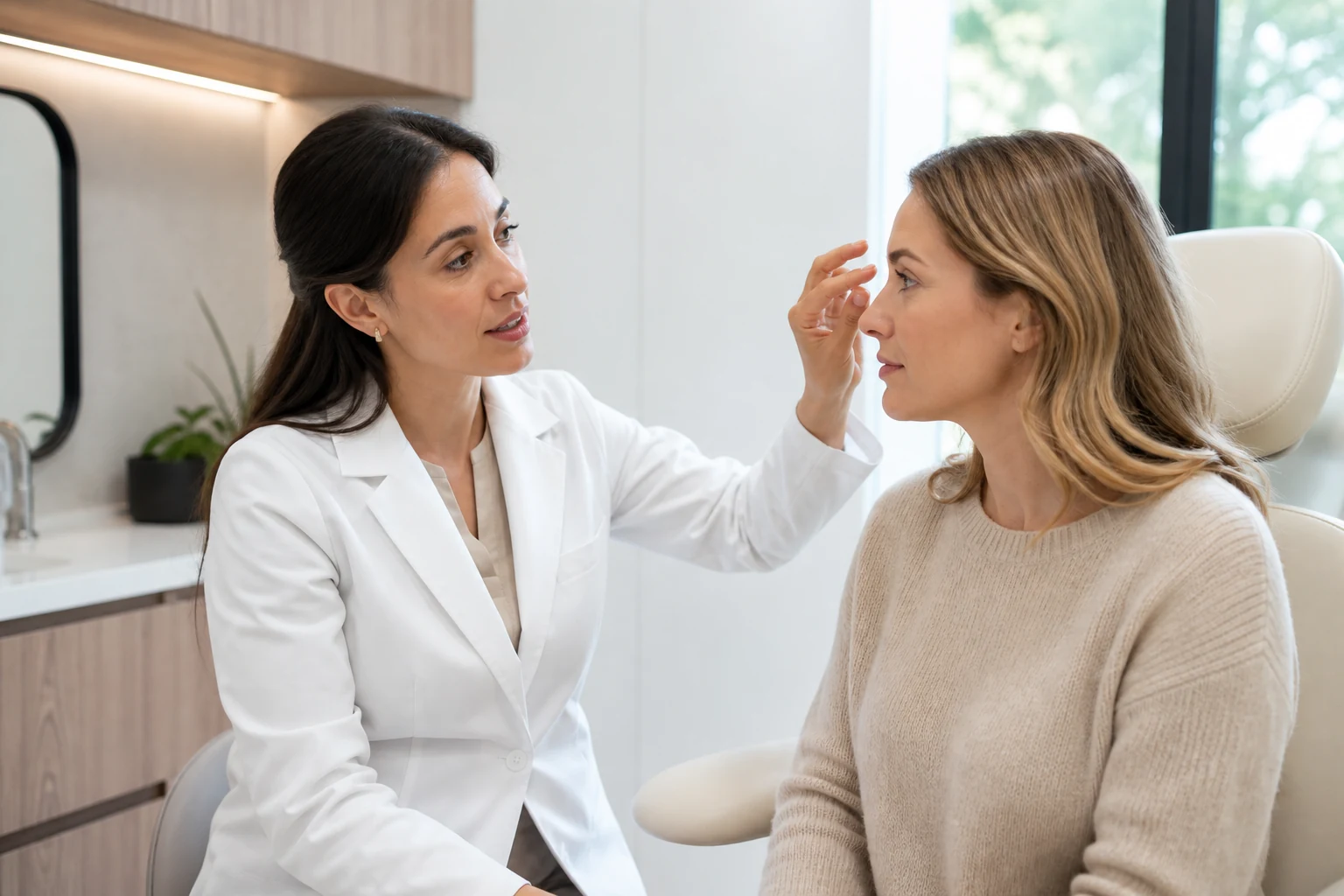
How Can You Tell Whether the Bump Is Really a Skin Tag?
A typical skin tag is soft, skin-colored or slightly darker, and may hang from a narrow stalk. Appearance alone is not enough for a reliable diagnosis, particularly on the eyelid. Other conditions can look similar, including skin cancers, chalazia, warts, xanthelasma, seborrheic keratoses, moles, and other eyelid papillomas.
A clinician may recommend a closer examination or biopsy if the growth has unusual features. Dr. Parth Patel and PS Dermatology's mole and skin-growth evaluation can help identify lesions that should not be treated as routine skin tags.
When should an eyelid growth be examined promptly?
Schedule an evaluation if the growth is new, changing, painful, rapidly enlarging, irregular, or bleeding without being rubbed or injured. A lesion that affects vision, interferes with blinking, distorts the eyelid margin, or causes lash loss also deserves timely attention.
Seek urgent care for a sudden vision change, severe eye pain, a chemical exposure to the eye, or bleeding that will not stop with gentle pressure. These symptoms should not wait for a routine cosmetic appointment.
How Professionals Remove Skin Tags Near the Eye
Professional care starts with confirming what the growth is and where it sits in relation to the lash line, tear drainage structures, and eyelid margin. If removal is appropriate, a dermatologist may use a precise snip excision, controlled cryotherapy, or electrodesiccation, depending on the lesion's size, base, and location. Local numbing may be used.
| Possible approach | What it involves | Why location matters |
|---|---|---|
| Snip excision | Precise removal at the base with sterile instruments | Careful positioning helps protect the eyelid margin and control bleeding |
| Cryotherapy | Controlled freezing by a trained clinician | Nearby eye structures must be protected |
| Electrodesiccation | Targeted treatment using electrical energy | Depth and placement must be controlled on thin eyelid skin |
No method is completely painless, scarless, or risk-free. Dr. Parth Patel will explain what to expect, how to care for the area, and which changes should prompt a follow-up.
What to Expect at an Eyelid-Growth Appointment
Your clinician will ask when the growth appeared, whether it has changed, and whether it causes pain, bleeding, irritation, or vision problems. The exam focuses on the lesion's surface, color, shape, attachment, and relationship to the eyelid structures. If the diagnosis is uncertain, removal may be postponed until the appropriate evaluation or biopsy is completed.
If the lesion is confirmed as a benign skin tag and removal is appropriate, the procedure is often performed in an office setting. Healing time and aftercare vary by the method, the size of the growth, and its location. Follow the clinician's instructions instead of applying makeup, creams, or home remedies to the area on your own.
Have the Eyelid Growth Identified First
Most skin tags, if they are indeed skin tags, are harmless, but the eyelid is not a safe place for trial-and-error treatment. A professional examination can confirm the diagnosis and help minimize avoidable injury to the eye and surrounding skin.
Schedule an eyelid-growth evaluation with PS Dermatology in Bridgewater
This article is for general education and is not a substitute for diagnosis or individualized medical advice.
Sources
- American Academy of Dermatology: Skin tags
- American Academy of Dermatology: Removing moles and skin tags
- Cleveland Clinic: Skin Tags (Acrochordons)
- U.S. Food and Drug Administration: K252198 clearance record
Frequently Asked Questions
Is it safe to remove a skin tag yourself?
No, removing any skin tag yourself is risky and not recommended. Avoid cutting, tying, freezing, or applying acids, especially near the eye. The eyelid has very thin skin, and its closeness to the eye raises the stakes considerably. Talk to Dr. Parth Patel for safe, professional removal options.
Why is DIY eyelid skin tag removal so dangerous?
DIY eyelid removal can cause real harm because of the delicate area involved. Reported risks include bleeding, infection, burns, scarring, pigment change, lash-line injury, and accidental eye injury. Because the eyelid is so close to the eye, even minor mistakes may lead to serious complications. Professional evaluation is safer.
Can a skin tag on the eyelid be something more serious?
Yes, an eyelid growth may not always be a harmless skin tag. While most tags are benign acrochordons, warts, moles, seborrheic keratoses, papillomas, and even skin cancer can look similar. Because they can be difficult to distinguish visually, a dermatologist should evaluate any new or changing eyelid bump.
Why have I suddenly got a skin tag on my eyelid?
An eyelid skin tag may suddenly appear for several reasons. Common contributing factors include skin-on-skin friction, natural aging changes, HPV, and conditions like insulin resistance or obesity. According to Cleveland Clinic, skin tags are benign and often form where skin experiences repeated friction. Talk to your doctor about persistent growths.
Are drugstore skin tag removal kits safe for the eyelid?
No, drugstore removal kits are not appropriate for use on the eyelid. FDA clearance for certain body-use products does not make them safe near the eye. These acids, freezing agents, and clipping tools can cause burns, scarring, or eye injury. Seek professional removal from a qualified dermatologist instead.
How do I safely get rid of a skin tag on my eyelid?
The safest way to remove an eyelid skin tag is through professional evaluation and removal by a dermatologist such as Dr. Parth Patel. A provider can confirm the growth is benign and use appropriate in-office techniques designed for delicate eye-area skin. Avoid all at-home methods and consult a board-certified dermatologist for guidance.
Ready to talk with a dermatologist?
Schedule a visit with our team at PS Dermatology and Surgery in Bridgewater, NJ - serving patients throughout Central New Jersey.