

Cosmetic Dermatology
Upper Blepharoplasty: What to Expect Before, During, and After
TL;DR: Upper blepharoplasty removes excess upper-eyelid skin and, when needed, a small amount of orbital fat through an incision hidden in the natural eyelid crease. It is typically an outpatient procedure done under local anesthesia. Most patients see visible improvement over the first couple of weeks, though swelling and bruising are common early on.
Upper eyelid skin can gradually become heavier, fold over the natural crease, or rest close to the lashes. For some people, the concern is mainly cosmetic: their eyes look tired even when they feel rested. For others, redundant skin can narrow the upper field of view. Upper blepharoplasty is designed to remove a carefully measured amount of excess upper-eyelid skin and, when appropriate, address protruding fat.
The important first step is confirming what is actually causing the heaviness. Excess skin, a low eyelid margin, and a descended brow can look similar in the mirror, but they are different problems and may require different treatment plans.
What Upper Blepharoplasty Can—and Cannot—Treat
Upper blepharoplasty primarily treats dermatochalasis, the medical term for loose or redundant upper-eyelid skin. It may also address selected areas of fullness caused by fat behind the eyelid. The goal is an upper lid that looks more open and refreshed while preserving comfortable eyelid closure and a natural expression.
Upper blepharoplasty does not automatically correct every “droopy eyelid.” During a consultation, the clinician should distinguish among three common contributors:
- Excess eyelid skin: Skin folds over the natural crease or rests near the lashes. This is the concern an upper blepharoplasty is designed to address.
- True eyelid ptosis: The eyelid margin itself sits lower than expected. Removing skin alone may not correct it because the eyelid-lifting mechanism may need separate treatment.
- Brow descent: A lower brow can push tissue toward the upper lid. In this situation, treating only the eyelid may not fully address the source of the heaviness.
That distinction protects both appearance and function. A personalized examination is more reliable than deciding from a photograph or focusing on a single measurement.
Who May Be a Candidate for Upper Blepharoplasty?
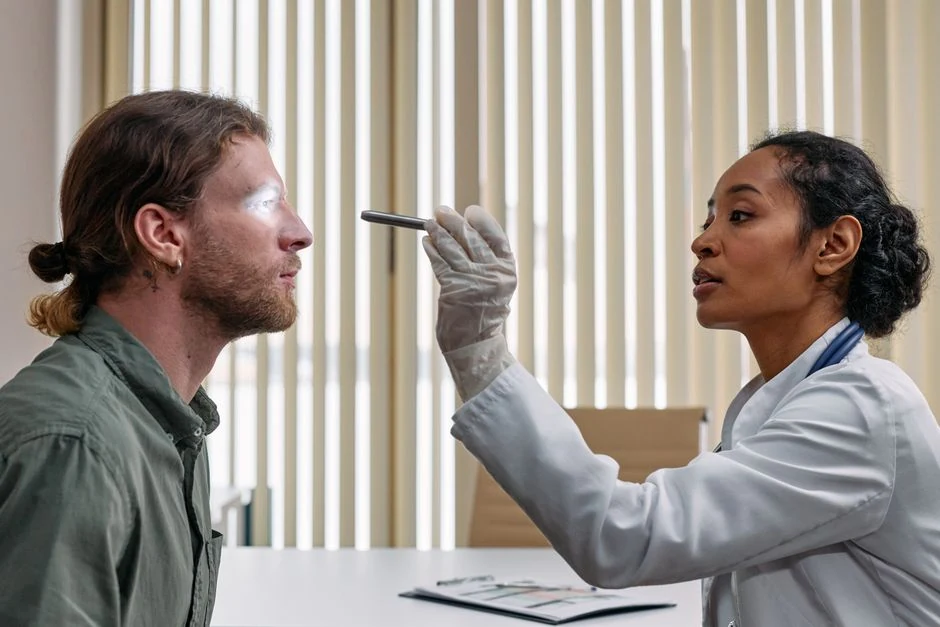
You may want an evaluation if upper-lid skin hides your crease, creates a hooded appearance, rests on the lashes, or makes your eyes look persistently tired. Some patients also notice that they raise their eyebrows to see more clearly or that the upper outer part of their vision feels restricted.
A consultation considers more than the amount of skin. Your clinician may evaluate:
- The position and symmetry of the eyelid margins
- The amount and distribution of redundant skin
- Brow position and how it contributes to eyelid hooding
- The natural eyelid crease and areas of fullness
- Dry-eye symptoms, contact-lens use, and prior eye problems or procedures
- Medications, supplements, smoking, and conditions that may affect healing
- Your goals and what would look natural with your facial anatomy
If excess skin may be affecting vision, additional documentation such as photographs or visual-field testing may be appropriate. Requirements vary, and insurance coverage is never guaranteed. Cosmetic upper blepharoplasty is generally not covered.
What Happens During an In-Office Upper Blepharoplasty?
PS Dermatology and Surgery offers upper blepharoplasty as an in-office procedure in Bridgewater, New Jersey. Before surgery, the planned skin removal is marked while you are in an upright position so the natural folds, crease, and asymmetries can be evaluated carefully.
The incision is typically placed within the natural upper-eyelid crease. A measured amount of excess skin is removed, and selected fat may be adjusted when it contributes to puffiness. Fine sutures are then used to close the incision. The exact technique and anesthesia plan depend on your anatomy, medical history, and surgical plan and should be reviewed during the consultation.
Conservative planning matters. Removing too much skin can make eyelid closure difficult and worsen eye-surface symptoms. The goal is not to create the tightest possible eyelid; it is to produce a balanced improvement while protecting function.
How to Prepare for Eyelid Surgery
Your surgical team will provide instructions tailored to you. Preparation often includes reviewing all prescription medicines, over-the-counter medicines, vitamins, and supplements. Do not stop a blood thinner or another prescribed medication unless the prescribing clinician and surgical team tell you to do so.
Patients are commonly asked to arrange transportation, prepare a comfortable recovery area, and keep the first several days relatively light. If you smoke or use nicotine, discuss that openly because nicotine can interfere with healing. Tell the office about dry eye, glaucoma, thyroid eye disease, previous eye surgery, allergies, and any recent change in vision.

Upper Blepharoplasty Recovery: A Practical Timeline
Recovery is individual, but swelling, bruising, tightness, and mild temporary irritation are common early on. The eyelids may not look perfectly even while swelling is changing. Follow the office’s instructions for compresses, incision care, activity, sleeping position, and any prescribed medication.
The first few days
Swelling and bruising are usually most noticeable early. Resting with the head elevated and using approved cool compresses may help. Vision can be temporarily blurry from swelling or ointment, but any sudden or significant vision change requires urgent attention.
The first one to two weeks
Bruising and swelling generally begin to improve, and sutures may be removed if non-dissolving stitches were used. Many patients plan social downtime during this period, although some need more time. Your clinician will tell you when it is appropriate to resume exercise, eye makeup, contact lenses, and other activities.
The following weeks and months
The incision initially may look pink or feel firm. It usually continues to soften and fade as healing progresses. Residual swelling can take longer to settle than the early bruising, so the final contour should not be judged too soon.
What Results Should You Expect?
A well-planned upper blepharoplasty can reveal more of the natural eyelid platform and make the eyes appear more rested and open. When redundant skin truly blocks the upper field of view, removing it may also provide a functional benefit. Results vary with anatomy, healing, brow position, eyelid position, and the amount of tissue that can be removed safely.
Blepharoplasty does not stop aging. Skin and supporting tissues continue to change over time, and it cannot erase every fine line around the eyes. It also does not guarantee perfect symmetry; nearly everyone has some natural difference between the two sides before surgery.
Risks and Symptoms That Need Prompt Attention
Upper blepharoplasty is surgery, so informed consent should include a clear discussion of benefits, alternatives, and potential complications. Risks include bleeding, infection, dry eye, difficulty closing the eyes, changes in sensation, unfavorable scarring, asymmetry, possible revision, and temporary or permanent visual change. Serious vision-threatening complications are rare but require immediate treatment.
Contact the surgical team promptly—or seek emergency care as directed—if you develop:
- Sudden loss or significant change in vision
- Severe or rapidly worsening pain
- Marked one-sided swelling or pressure
- Bleeding that does not stop as instructed
- Increasing redness, drainage, fever, or other signs of infection
Your own postoperative instructions take priority over general online guidance.
Upper Blepharoplasty FAQs
Will the scar be visible?
The incision is generally positioned in the natural upper-lid crease to help camouflage it. Scars take time to mature, and individual healing varies. No surgeon can promise a scarless result.
Can Botox or skin-tightening treatment replace surgery?
Non-surgical treatments may help selected concerns around the brow or improve mild skin changes, but they do not remove truly redundant upper-eyelid skin. The right option depends on whether the main issue is skin, eyelid position, brow position, or a combination.
Can upper blepharoplasty improve vision?
It may help when redundant upper-eyelid skin is physically obstructing the upper visual field. It will not improve vision problems caused by the eye itself, and not every patient has a functional indication.
Is upper blepharoplasty covered by insurance?
Cosmetic surgery is typically not covered. A potentially functional case may require examination findings, photographs, visual-field testing, or other documentation. Each plan uses its own criteria, so coverage and out-of-pocket costs must be confirmed individually.
How long do results last?
The removed skin does not grow back, but the eyelids and brow continue to age. Many patients enjoy a long-lasting improvement, though longevity and the possibility of future treatment vary.
Schedule an Upper-Eyelid Consultation in Bridgewater, NJ
The most useful consultation answers two questions: what structure is creating the heavy appearance, and which treatment can improve it without compromising comfortable eyelid function? PS Dermatology and Surgery can evaluate your upper eyelids, brow position, eye history, and goals, then discuss whether an in-office upper blepharoplasty is appropriate.
Schedule a consultation online or call 732-443-3975.
This article is for general education and is not a substitute for an individual medical evaluation.
Frequently Asked Questions
What does upper blepharoplasty involve?
Upper blepharoplasty removes excess upper-lid skin and, when needed, a small amount of orbital fat to refresh a heavy, hooded upper eye. The incision is usually placed in the natural eyelid crease, so the healed line tends to hide within the fold. Consult a board-certified provider to review your options.
Who is a good candidate for upper blepharoplasty?
Good candidates often notice hooded eyes, heavy lids by day's end, a less-visible upper-lid crease, or puffiness from fatty deposits. Your provider can help identify whether excess skin, orbital fat, or a sagging brow is contributing. Talk to your doctor about whether this procedure may suit your goals.
What causes a hooded upper eyelid?
A hooded upper eyelid develops as skin loses elasticity with age and the fat pad behind it bulges forward. Together, excess skin and orbital fat can drape over the crease, creating a drooping, heavy look. A provider can assess which specific tissues are contributing to your appearance.
What's the difference between upper and lower blepharoplasty?
Upper blepharoplasty targets the upper eyelid to address hooded skin and heavy lids, and may improve an obstructed field of vision. Lower blepharoplasty targets the lower eyelid for under-eye bags and puffiness, rarely affecting vision. Incisions differ, with the upper procedure using the natural eyelid crease.
Can upper blepharoplasty improve vision?
Upper blepharoplasty may improve an obstructed field of vision when heavy, hooded skin drapes over the eyelid and blocks your upper line of sight. Unlike lower blepharoplasty, which rarely affects vision, the upper procedure can address functional concerns. Consult your provider to discuss whether your case involves visual obstruction.
What is the downside of blepharoplasty?
Like any surgery, blepharoplasty carries potential downsides including swelling, bruising, temporary dryness, and a recovery period before results settle. Individual outcomes vary, and this information is educational rather than prescriptive. Talk to Dr. Parth Patel about the specific risks and realistic recovery expectations for your situation.
Ready to talk with a dermatologist?
Schedule a visit with our team at PS Dermatology and Surgery in Bridgewater, NJ - serving patients throughout Central New Jersey.