
Medical Dermatology
Why Eczema Gets Worse in Winter, and When to See a Dermatologist
Eczema often gets worse in winter because the air loses moisture, both outdoors and inside heated homes. That dry air is hard on skin that already struggles to hold on to moisture, and it can leave skin itchy, cracked, and easier to irritate. A few changes to how you bathe, moisturize, and dress can help. When they are not enough, a dermatologist can adjust your treatment.
Why does winter make eczema worse?
Low humidity is a common reason, and several winter habits add to it. In eczema, changes in the skin's protective outer layer let moisture escape more easily, according to the National Institute of Arthritis and Musculoskeletal and Skin Diseases.
Dryness is about more than water. The natural oils in your skin are what help hold moisture in. When those oils are lost, the outer layer can dry and crack, which lets irritants, allergens, and bacteria get in. The result is redness and itching, and scratching opens the skin further. This is the itch-scratch cycle.
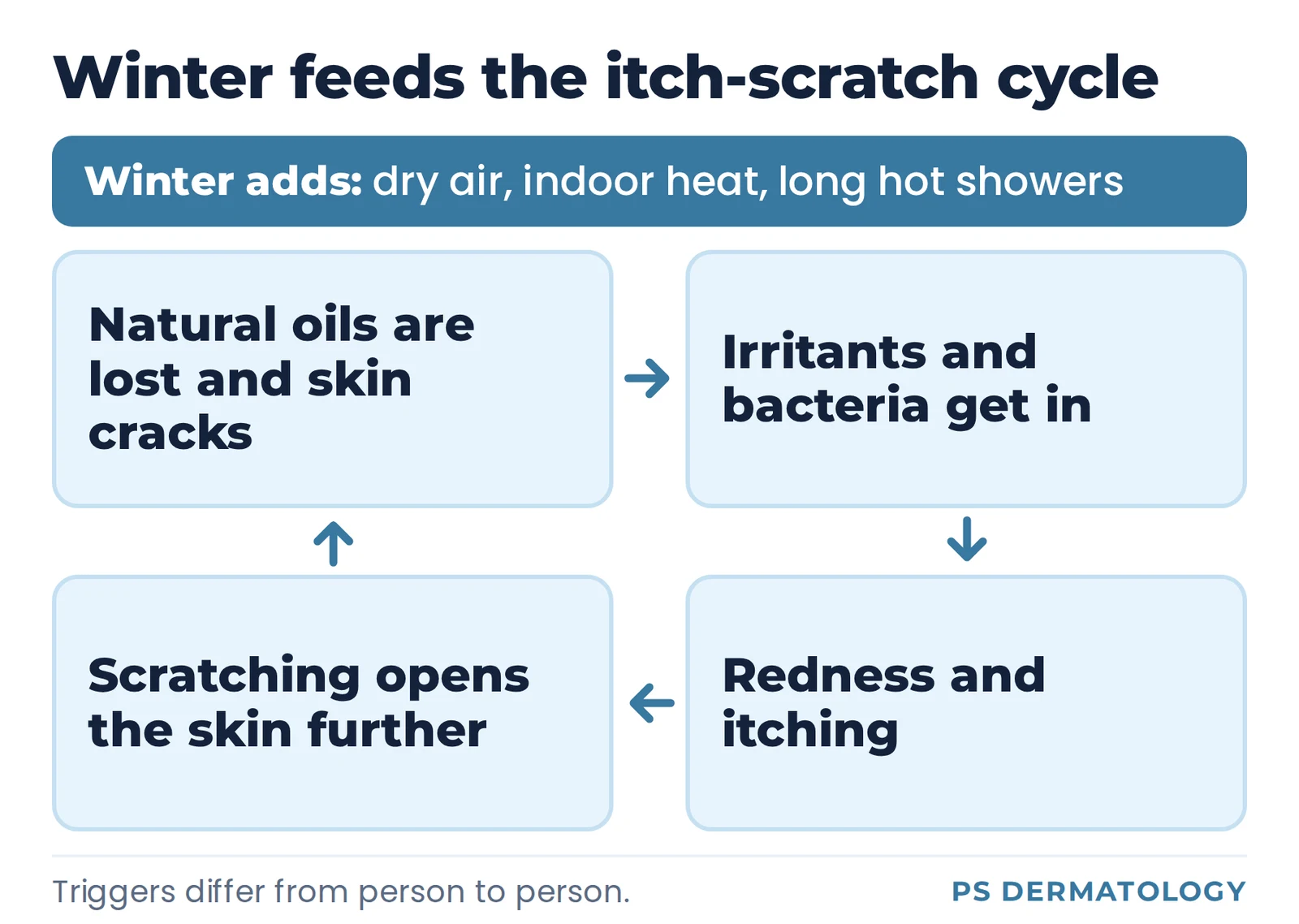
These winter habits and conditions can feed that cycle:
- Indoor heating. Central heat keeps you warm but can leave indoor air very dry.
- Long, hot showers. They feel good on a cold morning, but hot water dissolves the skin's natural oils.
- Wool and scratchy fabrics. Sweaters, scarves, and rough layers can irritate skin directly.
- Sudden temperature changes. Moving between cold air and warm rooms, or overheating under heavy layers, can bring on sweating and itching.
- Frequent hand washing. Cold and flu season means more washing, which can dry the hands. Keep washing, and moisturize afterward.
Triggers differ from person to person, so your pattern may not match this list exactly.
Is it eczema or just dry winter skin?
The two can look alike and often occur together, but eczema tends to itch more and return in the same places. Dry skin usually improves with regular moisturizer. Eczema may need more than that.
| Dry winter skin | Eczema | |
|---|---|---|
| Feel | Rough, tight, or flaky | Itchy, often before a rash appears |
| Look | Flaking and fine cracks | Inflamed patches that may look red, or dark brown, purple, or grayish on darker skin tones |
| Common places in adults | Can show up anywhere | Hands, eyelids, and around the elbows and knees |
| Response to moisturizer | Usually improves | May help, but flares can need prescription treatment |
If it looks more like simple dryness, our dry skin guide covers what to change first.
What can you do at home this winter?
The goal is to protect your skin's natural oils and seal in moisture. These steps draw on our own patient guidance and on advice from the American Academy of Dermatology.
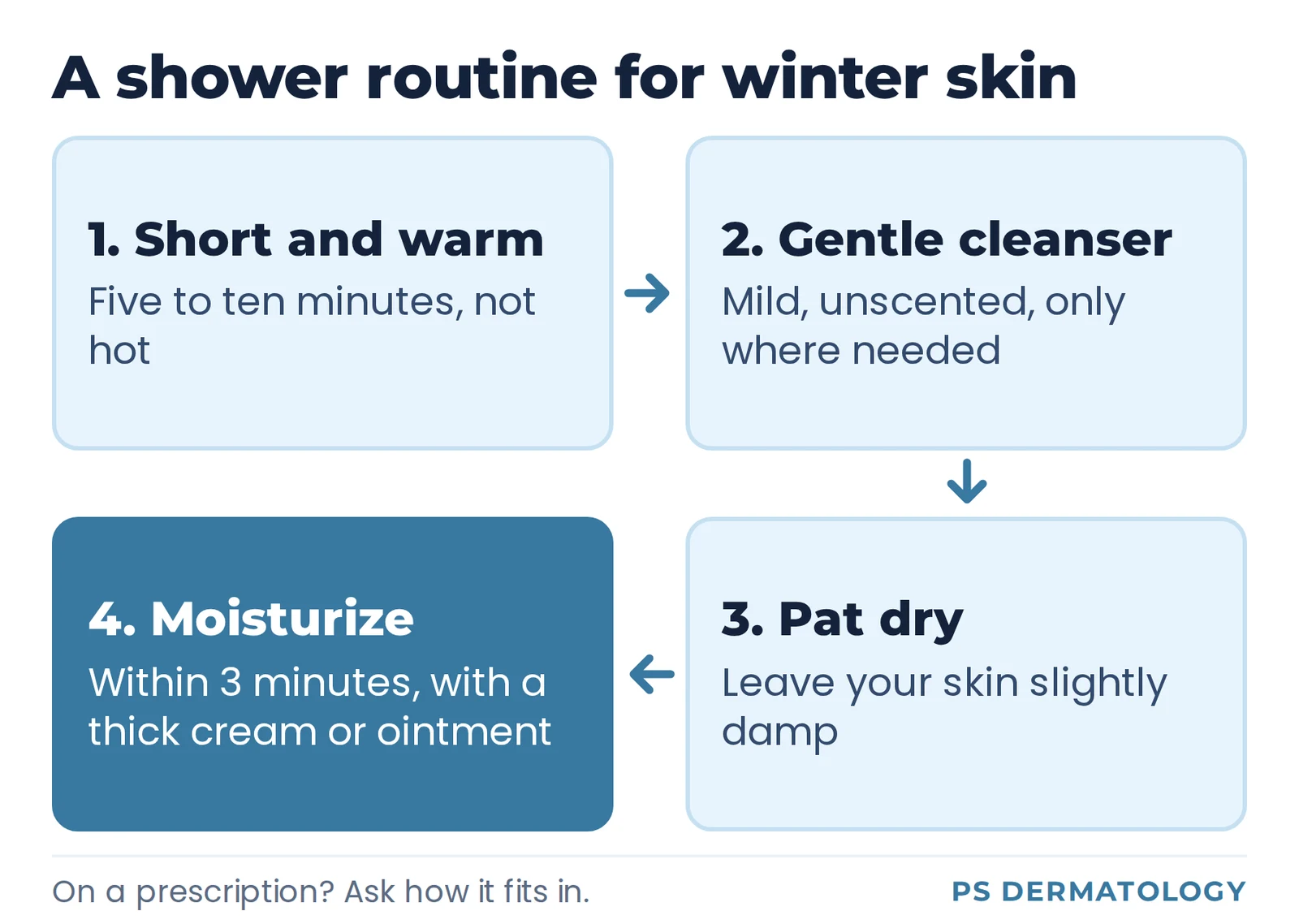
- Keep showers short and warm. The American Academy of Dermatology suggests five to ten minutes in warm water, not hot.
- Use a mild, unscented cleanser, and only where you need it. Underarms, groin, and feet are the areas that truly need cleanser every day.
- Moisturize within 3 minutes of bathing. Pat your skin dry first, then apply while it is still damp.
- Choose a thicker product. Ointments and creams add more moisture than lotions. Look for something unscented, ideally with ceramides, which mimic your skin's natural lipids.
- Moisturize again during the day. Two to three times a day is a reasonable goal, including after hand washing and before bed.
- Add moisture to the air. A humidifier can help if your home feels dry. Clean it regularly, following the manufacturer's directions.
- Dress in soft, loose layers. Cotton is a good choice next to the skin. Layers also make it easier to avoid overheating.
- Try not to scratch. Keep your nails short, and consider light gloves at night if you scratch in your sleep.
Children often flare with dry winter air too. The same basics apply, with bathing as often as their dermatologist recommends. Our pediatric eczema page has more for parents.
When should you see a dermatologist?
See a dermatologist when home care is not controlling your eczema, or sooner if you notice signs of infection. Scratching can lead to skin infections, and an infection can make eczema harder to control.
Make an appointment if:
- Your skin does not improve with moisturizer and avoiding your triggers.
- Your symptoms are getting worse, or a treatment that used to work has stopped working.
- The itch is keeping you up at night or getting in the way of work or daily life.
- You have a rash that has never been diagnosed. Eczema can start in adulthood, and other conditions can look similar.
Call promptly if you notice fever, pain, warmth, swelling, or redness that is getting worse. MedlinePlus lists these among the signs of infection to report to your doctor.
How do dermatologists treat a winter flare?
Treatment depends on how severe your eczema is, where it appears, and how it has responded so far. Eczema is a long-term condition for many people, so the aim is to calm the flare and then help keep your skin under control.
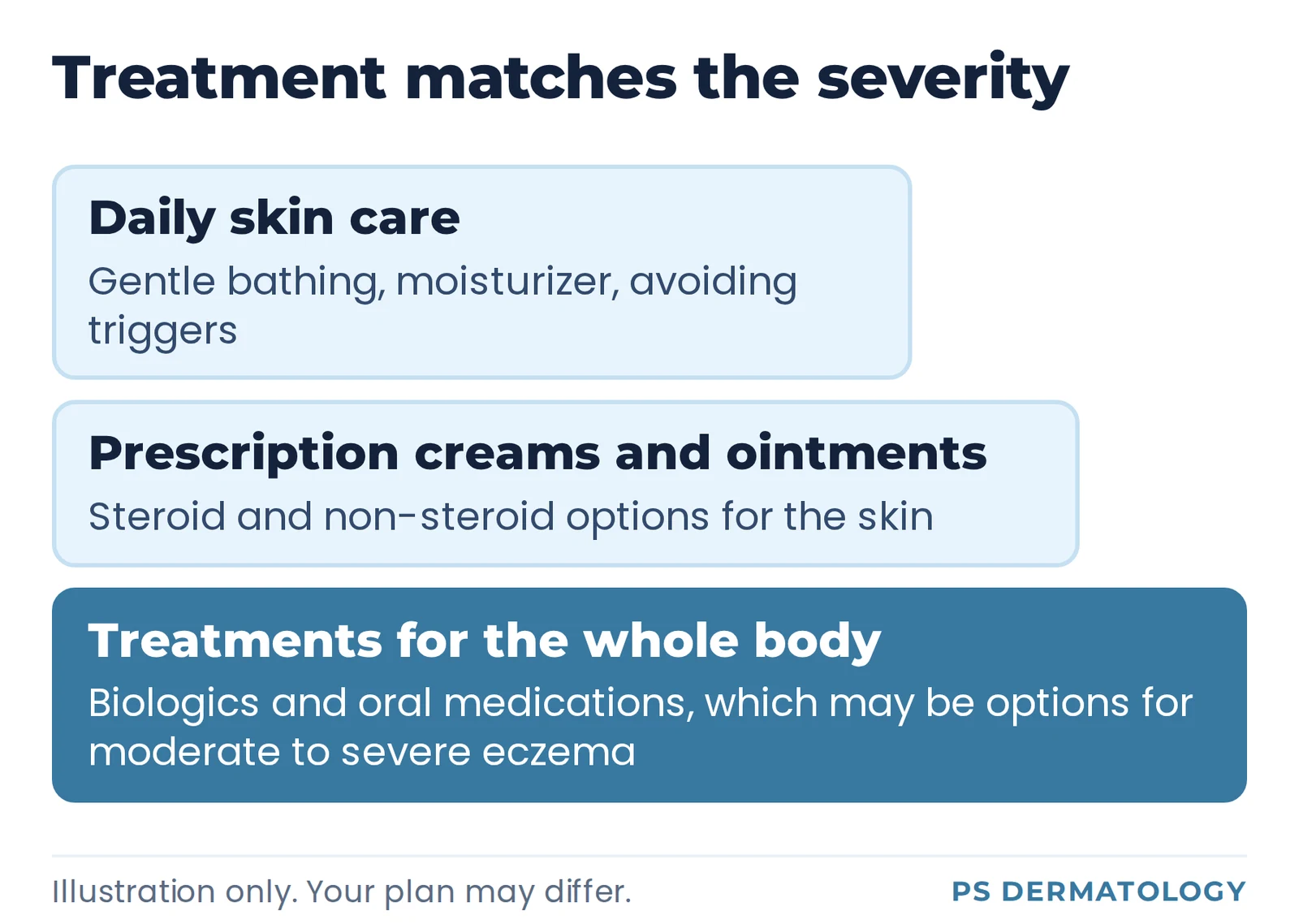
Your visit may cover:
- A skin care plan. A routine built around your skin, your triggers, and your season.
- Prescription creams and ointments. Topical corticosteroids are the most common treatment for flares. Non-steroid options can be useful for sensitive areas or longer-term use.
- Treatment for infection. Antibiotics are used when an infection is part of the picture.
- Treatments that work throughout the body. Biologic therapies and oral medications may be options for moderate to severe eczema that is not controlled with treatments applied to the skin.
- Allergy testing, in some cases. We may consider it when your history suggests allergens are playing a role.
Each option has its own benefits and risks. You can read more on our adult eczema treatment page, and your dermatologist can talk through what fits your situation.
FAQ
Does eczema go away in the summer?
Some people notice their skin improves when the air is more humid. Others flare in warm weather, because sweating can increase itching. Summer improvement does not mean the condition is gone, so it is worth keeping up your routine.
Should I shower less often when my eczema flares?
Not necessarily. Short, warm baths or showers followed right away by moisturizer are usually the focus, rather than skipping them. Ask your dermatologist what makes sense for your skin.
Can adults get eczema for the first time?
Yes. Eczema may continue from childhood or begin in adulthood. Because other conditions can look similar, a new rash is worth having checked.
What should you do next?
If your eczema flares every winter, the start of the season is a good time to review your routine and your treatment plan. Our board-certified dermatology team in Bridgewater cares for adults and children across Somerset County.
Individual results vary.
Sources
- Atopic dermatitis, National Institute of Arthritis and Musculoskeletal and Skin Diseases
- Atopic dermatitis self-care, MedlinePlus
- Dermatologists' top tips for relieving dry skin, American Academy of Dermatology
- Winter eczema care for children, American Academy of Dermatology
- Atopic dermatitis signs and symptoms, American Academy of Dermatology
- Atopic dermatitis treatment, American Academy of Dermatology
Ready to talk with a dermatologist?
Schedule a visit with our team at PS Dermatology and Surgery in Bridgewater, NJ - serving patients throughout Central New Jersey.