

When to See a Dermatologist for a Mole
By Dr. Parth Patel, MD | Board-Certified Dermatologist and Fellowship-Trained Mohs Surgeon | PS Dermatology and Surgery, Bridgewater, NJ
Most moles are harmless, but changes in size, shape, or color can sometimes signal something more serious. Knowing when to see a dermatologist for a mole can make a significant difference in outcomes, especially when melanoma or other skin cancers are caught early. At PS Dermatology and Surgery in Bridgewater, NJ, we evaluate suspicious moles using advanced dermoscopy and provide clear guidance on next steps. This guide covers the warning signs, risk factors, and evaluation process so you can make informed decisions about your skin health.
Why Mole Changes Deserve Your Attention
Moles change for many reasons, and most changes are benign. Hormonal shifts, sun exposure, and normal aging can all alter a mole’s appearance over time. However, certain changes may indicate atypical cell growth that warrants professional evaluation.
The distinction between a benign mole and a potentially dangerous one often comes down to how it changes and how quickly. Benign moles tend to be symmetrical, uniform in color, and stable over time. A suspicious mole may grow unevenly, develop multiple colors, or change in ways that stand out from your other moles. Other skin growths, including basal cell carcinoma, can also appear as new or changing spots that deserve attention.
Early detection is critical. According to the CDC, skin cancer is the most common cancer in the United States, and melanoma accounts for the majority of skin cancer deaths. When identified in its earliest stages, the five-year survival rate for melanoma is above 99%. Waiting to have a suspicious mole evaluated can allow abnormal cells to progress, making treatment more complex.
Key takeaway: Any mole that is changing, new, or looks different from your other moles is worth having a dermatologist evaluate. At PS Dermatology and Surgery in Bridgewater, NJ, we recommend erring on the side of caution.
The ABCDE Warning Signs That Need Professional Evaluation
The ABCDE framework is a widely recognized tool for identifying suspicious moles. Developed by dermatologists and endorsed by the Mayo Clinic, these criteria help patients recognize features that may indicate melanoma or atypical mole growth.
Visual Changes You Shouldn’t Ignore
Each letter represents a specific characteristic to watch for:
- Asymmetry: One half of the mole does not mirror the other half
- Border irregularity: Edges appear ragged, blurred, or notched rather than smooth
- Color variation: Multiple shades of brown, black, red, white, or blue within a single mole
- Diameter: The mole is larger than 6 millimeters (roughly the size of a pencil eraser), though melanomas can be smaller
- Evolving: Any change in size, shape, color, elevation, or new symptoms like itching or bleeding
In practice, color variation and evolving characteristics tend to be the most clinically significant indicators. A mole that was once uniformly brown but now shows patches of darker pigment or redness warrants prompt evaluation.
How Quickly Changes Can Develop
Melanoma can develop over weeks to months, not just years. Some aggressive subtypes, such as nodular melanoma, may appear suddenly as a firm, raised bump that grows rapidly. Any mole that changes noticeably within a few weeks should be evaluated by a dermatology and dermatologic surgery specialist without delay.
Beyond ABCDEs: Other Reasons to Book an Appointment
Several lesser-known warning signs also justify a dermatologist visit. Many patients focus solely on the ABCDE criteria, but other symptoms can be equally important in identifying skin concerns early.
The “ugly duckling sign” refers to a mole that simply looks different from all the others on your body. Even if it does not meet specific ABCDE criteria, a mole that stands out from your personal pattern deserves evaluation. Other reasons to schedule an appointment include:
- A mole that itches, bleeds, or crusts without obvious injury
- New moles appearing after age 30
- Moles in hard-to-monitor locations such as the scalp, between toes, or on the back
- A sore or spot that does not heal within a few weeks
Not every unusual skin growth is dangerous. Many patients discover benign growths like cherry angiomas during self-exams, which are common and typically harmless. A dermatologist can quickly distinguish between benign and atypical findings.
Risk Factors That Lower Your Threshold for a Visit
Certain risk factors mean you should seek evaluation sooner when you notice any mole changes. The National Cancer Institute identifies several factors that increase melanoma risk, and patients with these factors may benefit from more frequent monitoring.
Family History and Genetic Risk
A first-degree relative with melanoma approximately doubles your own risk, according to research published through the National Library of Medicine. Familial atypical mole and melanoma syndrome (FAMMM) further increases risk. Patients with a personal history of melanoma or prior atypical moles should also maintain a closer relationship with their dermatologist, as recurrence or new primary melanomas may develop.
Sun Exposure and Skin Type
Fair-skinned individuals, particularly those who burn easily and tan poorly, face higher melanoma risk. A history of blistering sunburns, especially during childhood, is a well-documented risk factor. Patients in Central New Jersey who enjoy outdoor activities at local parks like the Washington Valley or Duke Farms should prioritize consistent mineral sunscreen protection and routine skin checks. Additional risk factors include:
- Having more than 50 common moles
- Immunosuppression from medication or medical conditions
- History of indoor tanning use
What Happens During a Mole Evaluation
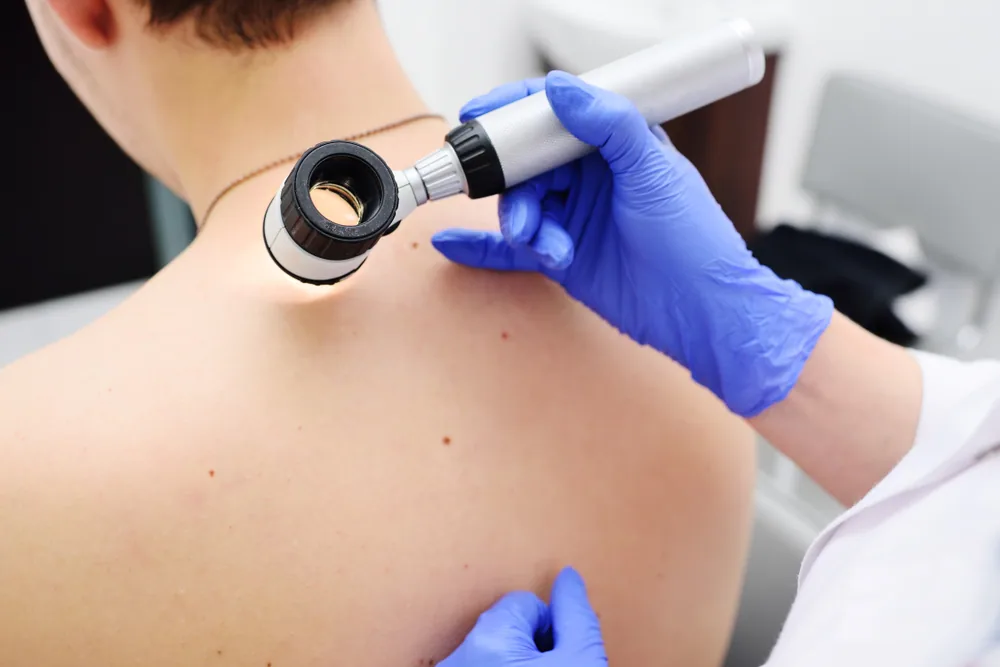
A suspicious mole evaluation typically begins with a visual examination and dermoscopy, a technique where your dermatologist uses a specialized magnifying instrument to examine the mole’s structures beneath the skin surface. This noninvasive tool helps differentiate benign patterns from those that may require further investigation.
Performing a regular full-body skin self-exam between dermatologist visits can help you catch concerning changes early and know when it’s time to schedule an appointment.
If your dermatologist identifies a concerning mole, they may recommend a skin biopsy procedure to determine whether abnormal cells are present.
During a thorough evaluation, your provider may also perform a total body skin exam to check for any additional spots of concern. Digital photography is sometimes used to document moles and track changes over time, creating a baseline for future comparison.
| Evaluation Step | What It Involves | Why It Matters |
|---|---|---|
| Visual exam | Assessment of ABCDE features and ugly duckling sign | Identifies moles needing closer inspection |
| Dermoscopy | Magnified view of subsurface pigment patterns | Improves diagnostic accuracy by up to 35% |
| Photography | Baseline images for sequential monitoring | Detects subtle changes between visits |
| Biopsy | Tissue sample sent to pathology | Provides definitive diagnosis |
If a biopsy reveals atypical or cancerous cells, your dermatologist will discuss treatment options based on the type and stage. Treatment approaches may range from simple excision to more specialized procedures such as Mohs surgery for skin cancer, which offers the highest cure rates while preserving healthy tissue. Your provider will guide you through each step of the process.
How Often Should Moles Be Checked?
Screening frequency depends on your individual risk level. For average-risk adults, many dermatologists recommend an annual skin exam. Patients with elevated risk factors, such as a personal or family history of melanoma or a high number of atypical moles, may benefit from exams every three to six months.
The American Academy of Dermatology recommends that all adults perform monthly self-exams at home and schedule professional evaluations when changes are noted. Understanding what to expect during a skin cancer screening appointment can help reduce hesitation about scheduling one.
A common concern is visiting “too often” or “bothering” the dermatologist with something minor. In skin cancer detection, there is no such thing as being too cautious. Dermatologists would rather evaluate ten benign moles than miss one melanoma. If something looks or feels different, schedule a visit rather than waiting for your next annual check.
Mole Evaluation in Bridgewater, NJ
Residents of Somerset, Hunterdon, and Middlesex counties looking for expert mole evaluation should choose a board-certified dermatologist with experience in both medical dermatology and dermatologic surgery. Advanced screening tools like dermoscopy and digital mole mapping can improve diagnostic accuracy and provide peace of mind.
Our dermatology practice serving the Far Hills community has served Central New Jersey families for years, offering comprehensive skin cancer diagnosis, treatment, and ongoing monitoring. Whether you need a single suspicious mole evaluated or a full-body skin check, our team provides thorough, personalized care in a comfortable setting.
If you notice a new or changing mole, do not wait for your next routine appointment. Early evaluation remains the single most important factor in successful skin cancer outcomes.
Sources
- CDC: Skin Cancer
- Mayo Clinic on Melanoma: Symptoms and Causes
- National Cancer Institute: Skin Cancer
- National Library of Medicine: PubMed
- American Academy of Dermatology on Moles: Overview
Frequently Asked Questions
When should you see a dermatologist for a suspicious mole?
You should see a dermatologist when a mole changes in size, shape, or color, or when a new mole appears that looks different from your others. Rapid changes, irregular borders, and multiple colors are particularly concerning. Early evaluation improves outcomes, especially if melanoma is detected at an early stage.
What are the ABCDE warning signs of a suspicious mole?
The ABCDE signs are Asymmetry, Border irregularity, Color variation, Diameter larger than a pencil eraser, and Evolving appearance. These guidelines help identify moles that may warrant professional evaluation. If a mole meets one or more of these criteria, schedule an appointment with a board-certified dermatologist for a thorough assessment.
What does a dermatologist do when evaluating a suspicious mole?
A dermatologist typically examines the mole using dermoscopy, a specialized magnification tool that reveals structures invisible to the naked eye. If the mole appears atypical, a biopsy may be recommended to check for abnormal cells. The results guide whether monitoring, excision, or further treatment is needed.
Can a mole change without being cancerous?
Yes, moles commonly change due to hormonal shifts, sun exposure, aging, and other benign factors. Most mole changes are not cancerous. However, because some changes can signal atypical cell growth, any mole that is evolving noticeably should be evaluated by a dermatologist to rule out potential concerns.
How often should you get a skin check for moles?
Most dermatologists recommend an annual full-body skin exam, though individuals with risk factors such as a family history of melanoma, fair skin, or numerous moles may benefit from more frequent checks. Talk to your doctor about the right screening schedule based on your personal risk profile.
What does a suspicious mole look like?
A suspicious mole may appear asymmetrical, have uneven or blurred borders, contain multiple shades of brown, black, or red, or be larger than six millimeters. It may also look noticeably different from your other moles. Any mole that stands out or is changing should be examined by a dermatologist.
What is the survival rate for melanoma caught early?
When melanoma is detected in its earliest stages, the five-year survival rate is above 99%, according to the CDC. This underscores the importance of prompt evaluation when a mole appears suspicious. Delaying assessment may allow abnormal cells to progress, potentially making treatment more complex and reducing favorable outcomes.
Ready to talk with a dermatologist?
Schedule a visit with our team at PS Dermatology and Surgery in Bridgewater, NJ - serving patients throughout Central New Jersey.