

Skin Biopsy: Types, Procedure & Results
If your dermatologist has recommended a skin biopsy, you are not alone. Skin biopsies are one of the most common procedures performed in dermatology offices across the country, and they play a critical role in skin cancer diagnosis and the evaluation of many other skin conditions. Understanding what the procedure involves, what types exist, and how to interpret your results can help ease anxiety and prepare you for the next steps in your care. At PS Dermatology and Surgery in Bridgewater, NJ, we perform skin biopsies regularly and guide patients through every stage of the process.
What Is a Skin Biopsy?
A skin biopsy is a procedure in which a small sample of skin tissue is removed and sent to a laboratory for microscopic examination by a physician. It is the definitive method used to determine how skin cancer is diagnosed and to evaluate a wide range of inflammatory, infectious, and autoimmune skin conditions. According to the American Academy of Dermatology, a biopsy is often the only way to confirm or rule out a suspected diagnosis with certainty.
The key takeaway: a skin biopsy provides your dermatologist with the precise cellular information needed to create an accurate treatment plan. For patients in Central New Jersey concerned about a changing mole or unusual spot, a biopsy offers clarity that a visual exam alone cannot provide.
What Are the Different Types of Skin Biopsy?
There are several types of skin biopsy, and the method your dermatologist selects depends on the size, location, and suspected nature of the lesion. Each technique offers distinct advantages for different clinical scenarios.
Shave Biopsy
A shave biopsy removes the top layers of skin using a small blade. This is the most frequently performed type and is commonly used when a lesion is raised or superficial. It typically does not require stitches and heals within one to two weeks. Shave biopsies are often used in the initial evaluation of potential basal cell carcinoma and squamous cell carcinoma, as well as various other rashes and skin lesions.
Regularly examining your skin at home can help you notice changes early, making it easier to discuss any concerns with your dermatologist before a biopsy is even needed.
Punch Biopsy
A punch biopsy uses a circular tool (typically 2 to 6 millimeters in diameter) to remove a deeper, cylindrical core of skin that includes the epidermis, dermis, and sometimes subcutaneous fat. According to the National Library of Medicine, punch biopsies are particularly useful for evaluating inflammatory conditions and deeper skin abnormalities. One or two sutures are usually placed to close the site.
Excisional Biopsy
An excisional biopsy removes an entire lesion along with a margin of surrounding healthy tissue. Excisional biopsies require sutures and are be performed by a dermatologist such as Dr. Parth Patel, at PS Dermatology and Surgery.
Incisional Biopsy
An incisional biopsy removes only a portion of a larger lesion for examination. This technique may be used when a lesion is too large for complete removal during the initial diagnostic stage.
| Biopsy Type | Depth | Common Uses | Closure |
|---|---|---|---|
| Shave | Superficial | Raised lesions, suspected BCC/SCC | No sutures needed |
| Punch | Full thickness | Inflammatory conditions, deeper lesions | 1-2 sutures |
| Excisional | Full lesion + margins | Suspected melanoma, small lesions | Sutures required |
| Incisional | Partial lesion | Large lesions needing partial sampling | Sutures required |
If you have a spot that concerns you, knowing when to see a dermatologist is an important first step. Early evaluation may lead to earlier detection and more treatment options.
Schedule your consultation at PS Dermatology and Surgery in Bridgewater, NJ, serving patients throughout Bridgewater, Warren, Somerset, Franklin, Bedminster, Branchburg, Somerville and Bound Brook, New Jersey.
What Happens During a Skin Biopsy Procedure?
A skin biopsy is a straightforward, in-office procedure that typically takes 15 to 20 minutes. Knowing what to expect can help reduce anxiety before your visit. Here is a general overview of the steps involved:
- Preparation: The area around the lesion is cleaned with an antiseptic solution.
- Local anesthesia: A small injection of lidocaine numbs the biopsy site. You may feel a brief sting, but the area becomes numb within seconds.
- Tissue removal: Your dermatologist removes the tissue sample using the appropriate technique (shave, punch, excisional, or incisional).
- Wound care: The site is bandaged, and you receive aftercare instructions. Sutures may be placed depending on the biopsy type.
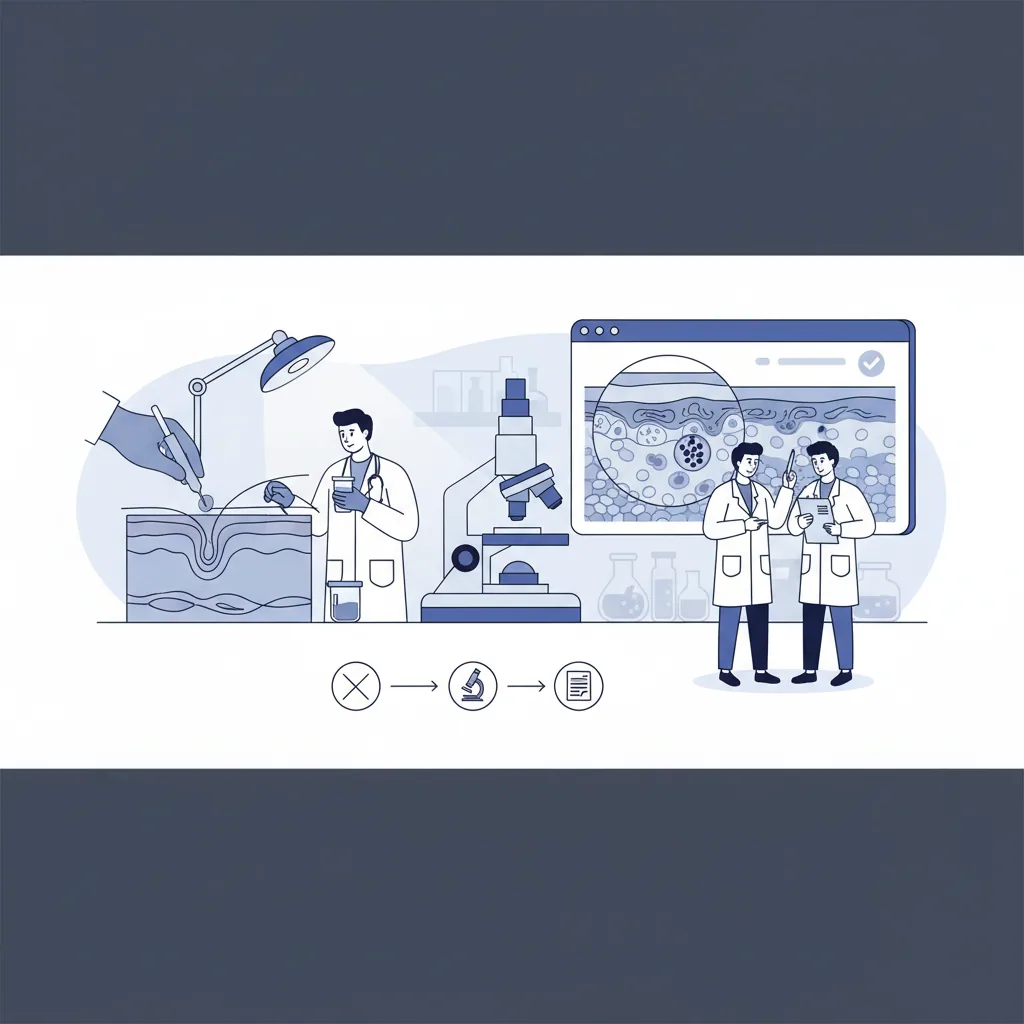
- Lab analysis: The sample is sent to a lab, where it is processed, stained, and examined under a microscope.
Most patients describe the procedure as causing minimal discomfort. Some tenderness and mild bruising at the biopsy site are normal in the days following the procedure. Your provider will give you specific wound care instructions, which typically include keeping the site clean and covered.
How Long Does It Take to Get Skin Biopsy Results?
Results from a skin biopsy typically arrive within 7 to 14 days, though some specialized tests may take longer. The timeline depends on the complexity of the case and whether additional staining or molecular testing is needed. At our Bridgewater practice, we contact patients promptly and schedule follow-up appointments to discuss findings and next steps.
“A skin biopsy is one of the most important tools in a dermatologist’s diagnostic toolkit. It allows us to move beyond visual assessment and provide patients with definitive answers about their skin health.”
How Are Skin Biopsy Results Interpreted?
Your biopsy results come in the form of a pathology report prepared by a dermatopathologist. This report includes detailed information about the tissue sample that your dermatologist will review with you. It is important to discuss your results with a qualified physician rather than attempting to interpret the report on your own.
Common findings on a pathology report may include:
- Benign (non-cancerous): The tissue shows no evidence of cancer. Examples include seborrheic keratoses, dermatofibromas, and benign nevi (moles).
- Pre-cancerous (dysplastic): The tissue shows atypical cells that may have an increased risk of progressing to cancer over time. Dysplastic nevi are a common example.
- Malignant (cancerous): The tissue contains cancer cells. The report will specify the type, such as basal cell carcinoma, squamous cell carcinoma, or melanoma, along with details like depth and margins.
- Inflammatory or infectious: The biopsy may reveal conditions such as psoriasis, eczema, or fungal infections.
According to the Mayo Clinic, the pathology report is a critical component of the diagnostic process, and your dermatologist will explain what the findings mean for your specific situation. If a skin biopsy for cancer reveals a malignancy, your provider may recommend additional procedures, such as Mohs micrographic surgery for certain skin cancers.
What Should You Do After a Skin Biopsy?
Proper aftercare helps promote healing and reduce the risk of complications. Your dermatologist will give you personalized instructions, but general guidelines include:
- Keep the wound clean and covered with a bandage for the first 24 to 48 hours
- Apply petroleum jelly or the recommended ointment to keep the site moist
- Avoid strenuous activity that may stretch or irritate the biopsy site
- Watch for signs of infection, including increasing redness, swelling, warmth, or drainage
- Contact your provider if you experience excessive bleeding or have concerns during the healing process
The Cleveland Clinic notes that most biopsy sites heal within two to three weeks, depending on the type of biopsy performed and its location on the body. Some patients experience minor scarring, which typically fades over time.
Sources
- American Academy of Dermatology: Skin biopsy overview and patient education
- National Library of Medicine: Punch biopsy technique and clinical applications
- Mayo Clinic: Skin biopsy procedure and pathology interpretation
- Cleveland Clinic: Aftercare and healing expectations for skin biopsies
Schedule Your Skin Biopsy Consultation in Bridgewater, NJ
Whether you have a suspicious spot that needs evaluation or you have recently received biopsy results and need expert guidance on the next steps, Dr. Parth Patel and the team at PS Dermatology and Surgery are here to help. As a fellowship-trained Mohs surgeon and dermatologic surgery specialist serving patients across Somerset, Hunterdon, and Middlesex counties, Dr. Patel provides thorough, compassionate care from diagnosis through treatment.
Ready to talk with a dermatologist?
Schedule a visit with our team at PS Dermatology and Surgery in Bridgewater, NJ - serving patients throughout Central New Jersey.