

How to Do a Full-Body Skin Self-Exam in Central NJ
Knowing how to check for skin cancer at home is one of the most practical habits you can develop. A regular skin self-exam takes about 10 to 15 minutes and may help you spot new or changing moles before they become a bigger concern. For residents across Somerset, Hunterdon, and Middlesex counties who spend time outdoors at parks like the Duke Farms trails or the Delaware and Raritan Canal towpath, routine self-checks are especially valuable. Here is a step-by-step skin self-exam guide you can follow at home.
Before You Start: What You Need for a Thorough Skin Self-Exam
A successful skin self-exam begins with the right setup. Performing your check regularly helps you notice gradual changes that might otherwise go unnoticed. The American Academy of Dermatology recommends regular self-exams as a complement to annual visits with your dermatologist. At PS Dermatology and Surgery in Bridgewater, NJ, we recommend pairing your at-home routine with a yearly professional skin cancer screening for the most thorough protection.
Gather Your Supplies
- A full-length mirror
- A hand-held mirror for hard-to-see areas
- A well-lit room (natural daylight or bright overhead lighting)
- A body map printout or your smartphone camera for documentation
- A comb or blow dryer for parting hair
Set Up Your Space with Proper Lighting
Choose a room with bright, even lighting and enough space to move freely. Bathrooms with overhead fixtures work well, but avoid dim or yellow-toned bulbs that can obscure subtle color changes in moles or spots.
Step 1: Examine Your Face, Scalp, and Neck
Start at the top and work down. Face the full-length mirror and look closely at your forehead, nose, cheeks, lips, chin, and ears. Use your fingers to feel for any new bumps or textured patches. Turn your head to inspect behind each ear and along the jawline, areas that are commonly overlooked during a skin self-exam.
How to Check Your Scalp Thoroughly
Your scalp receives significant sun exposure yet rarely gets examined. Use a comb or blow dryer on a cool setting to part your hair section by section, working from the front hairline to the crown and down to the nape. If you have thinning hair, pay extra attention to areas where the scalp is most exposed. Ask a partner to help inspect the crown if needed.
Step 2: Check Your Arms, Hands, and Torso
Extend each arm and examine the upper arm, elbow, forearm, wrist, palm, and back of the hand. Lift your arms to check the underarm area, where spots can develop in skin folds. On the torso, inspect your chest, abdomen, and sides carefully. Small, red spots called cherry angiomas are usually harmless, but any new, rapidly growing, or irregularly shaped lesion deserves attention. Sun-exposed areas of the chest and arms are among the most frequent sites for basal cell carcinoma, the most common form of skin cancer.
Don’t Forget Your Fingernails and Nail Beds
Examine each fingernail individually. Look for dark streaks, discoloration, or changes in nail shape. A new dark band running lengthwise on a nail may warrant evaluation by your dermatologist. Also check beneath rings, watch bands, and bracelets, as these areas are often skipped.
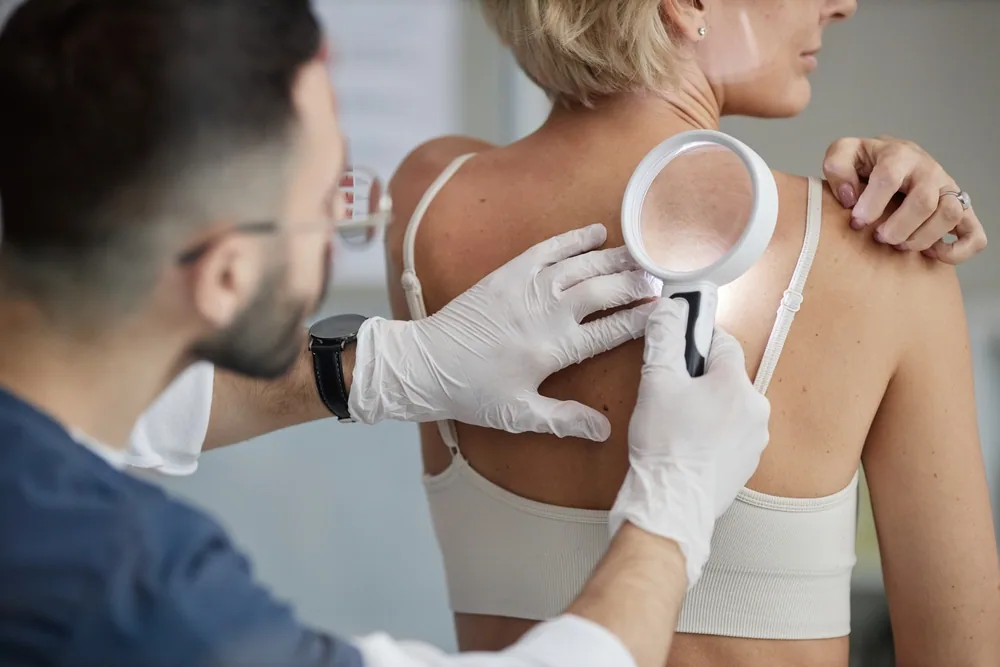
Step 3: Inspect Your Back, Shoulders, and Buttocks
The back is one of the most common locations for melanoma, particularly in men, partly because it is difficult to monitor without assistance. Stand with your back to the full-length mirror and hold a hand mirror in front of you to view the reflection. Scan your shoulders, upper back, lower back, and buttocks methodically. Understanding the connection between skin cancer and Mohs surgery can help you appreciate why catching suspicious spots early matters so much.
Using a Partner or Photo Method for Hard-to-See Areas
If the two-mirror technique feels awkward, ask a trusted partner to examine your back under bright light. Another option is to use your smartphone to photograph your back regularly. Comparing photos side by side over time can reveal changes that are easy to miss in a single session.
Step 4: Examine Your Legs, Feet, and Toes
Sit down and inspect the front and back of each leg. Check behind the knees and along the inner thighs, areas that often go unexamined. Then move to your feet: examine the tops, sides, soles, between each toe, and under toenails. Acral melanoma, which develops on the palms, soles, or under nails, is frequently diagnosed at later stages because people simply do not think to look there. Consistent daily use of mineral sunscreen protection on exposed skin, including the tops of feet in sandals, may help reduce cumulative UV damage.
Why the Soles of Your Feet Matter
The soles of the feet can develop melanoma regardless of skin tone. According to the Skin Cancer Foundation, acral melanoma accounts for a significant percentage of melanoma cases in people with darker skin. Checking this area regularly is a simple step that could make a meaningful difference.
What to Do Next: When to See a Central New Jersey Dermatologist
If you notice any spot that is new, changing in size or color, bleeding, or itching, it is important to know when to see a dermatologist promptly. The ABCDE rule offers a helpful framework for evaluating moles: Asymmetry, Border irregularity, Color variation, Diameter larger than a pencil eraser, and Evolving appearance. Any single one of these signs is reason enough to schedule an evaluation. Self-exams are a valuable habit, but they complement rather than replace a professional skin cancer screening performed by a board-certified dermatologist.
How to Track and Document Changes Over Time
Key takeaway: Photograph suspicious spots with a ruler or coin for scale, note the date, and store images in a dedicated folder on your phone. Bring these records to your dermatology appointment so your provider can compare changes over time.
| Warning Sign | What to Look For |
|---|---|
| Asymmetry | One half of the mole does not match the other |
| Border | Edges are ragged, notched, or blurred |
| Color | Multiple shades of brown, black, red, or blue |
| Diameter | Larger than 6mm (pencil eraser size) |
| Evolving | Any change in size, shape, color, or symptoms |
Performing a thorough skin self-exam regularly puts you in the best position to catch changes early. Our team at PS Dermatology and Surgery, serving patients throughout Central New Jersey from our Bridgewater office, offers comprehensive skin cancer screenings, diagnosis, and advanced treatment options including Mohs micrographic surgery. If your self-exam reveals anything concerning, do not wait.
Sources
- American Academy of Dermatology: skin self-exam guidelines and recommendations
- Skin Cancer Foundation: melanoma statistics and acral melanoma overview
Frequently Asked Questions
How often should you perform a skin self-exam?
Most dermatologists recommend performing a full-body skin self-exam regularly. Checking a few times a year helps you notice gradual changes in moles or spots. Regular self-exams should complement an annual professional skin cancer screening with your dermatologist for the most thorough monitoring.
What supplies do you need for a skin self-exam at home?
You need a full-length mirror, a hand-held mirror for hard-to-reach areas, and a well-lit room with bright, even lighting. A body map printout or smartphone camera helps you document spots over time. A comb or blow dryer is useful for parting hair to check your scalp.
What should you look for during a skin self-exam?
Look for new moles, growths, or spots, and check existing ones for changes in size, shape, color, or texture. The ABCDE rule may help: Asymmetry, Border irregularity, Color variation, Diameter larger than a pencil eraser, and Evolving appearance. Contact your dermatologist if you notice any concerning changes.
How do you check hard-to-see areas during a skin self-exam?
Use a hand-held mirror combined with a full-length mirror to examine your back, scalp, and behind your ears. Part your hair with a comb or blow dryer to inspect your scalp. Ask a trusted partner to help check areas you cannot see clearly on your own.
Can a skin self-exam replace a visit to the dermatologist?
A skin self-exam is a valuable complement to professional screenings but should not replace them. Dermatologists use specialized tools like dermoscopy to evaluate spots that may appear normal to the untrained eye. Talk to your doctor about scheduling an annual full-body skin cancer screening alongside your regular self-checks.
When should I see a dermatologist about a mole?
See a dermatologist if a mole changes in size, shape, or color, develops irregular borders, or begins to itch, bleed, or crust. New moles appearing after age 30 may also warrant evaluation. Early detection of suspicious lesions can significantly improve treatment outcomes, so do not delay scheduling an appointment.
What does a suspicious mole look like?
A suspicious mole may appear asymmetrical, have uneven or ragged borders, contain multiple colors such as brown, black, or red, or measure larger than six millimeters across. Moles that evolve noticeably over weeks or months also warrant attention. Consult your dermatologist for a professional evaluation of any concerning spots.
Ready to talk with a dermatologist?
Schedule a visit with our team at PS Dermatology and Surgery in Bridgewater, NJ - serving patients throughout Central New Jersey.