

Cosmetic Dermatology
Earlobe Repair for Torn, Stretched, or Gauged Earlobes
TL;DR: Earlobe repair can close a partial or complete tear, correct a piercing stretched by heavy earrings, or reshape an opening left after gauges. The technique and recovery plan depend on the amount and quality of remaining tissue; an in-person exam determines the appropriate repair.
An earlobe does not have to split completely before it becomes difficult to wear earrings. A piercing can slowly lengthen into a narrow slit, the tissue beneath it can become paper-thin, or a once-gauged opening can remain wide after the jewelry comes out. These changes are common reasons people ask about earlobe repair.
Earlobe repair at PS Dermatology and Surgery is designed for torn, stretched, asymmetric, or gauged earlobes. The right approach depends on how much healthy tissue remains, the size and shape of the opening, and how you want the lobe to look afterward.
What Can Cause a Torn or Stretched Earlobe?
Earlobes are soft tissue without the firm cartilage support found higher on the ear. That makes them flexible, but it also means a piercing can change under repeated weight or sudden force.
- A partial tear: The piercing has lengthened toward the lower edge of the lobe, but a thin bridge of skin remains.
- A complete split: The opening has torn through the bottom of the earlobe, creating two separate edges.
- Gradual stretching from earrings: Years of heavy earrings can enlarge a round piercing into an oval or vertical slit. A piercing placed close to the bottom of the lobe has less tissue supporting it and may be more vulnerable.
- An accidental pull: An earring can catch on clothing, a towel, a hairbrush, or another object and tear the lobe.
- Gauges or plugs: Progressively larger jewelry intentionally expands the piercing. After large gauges are removed, the opening may shrink somewhat, remain widened, or leave a long, thin, or drooping lobe.
These patterns can overlap. For example, a piercing stretched by heavy earrings may later tear during a relatively minor snag because very little tissue remains beneath it.
Will a Stretched or Gauged Earlobe Close on Its Own?
Some small, gently stretched openings contract after the jewelry is removed. How much they shrink is unpredictable and depends on factors such as the maximum size reached, how long the lobe was stretched, the condition of the skin, and individual healing. A long-standing epithelialized opening—the skin-lined channel formed by a piercing—may not close completely on its own.
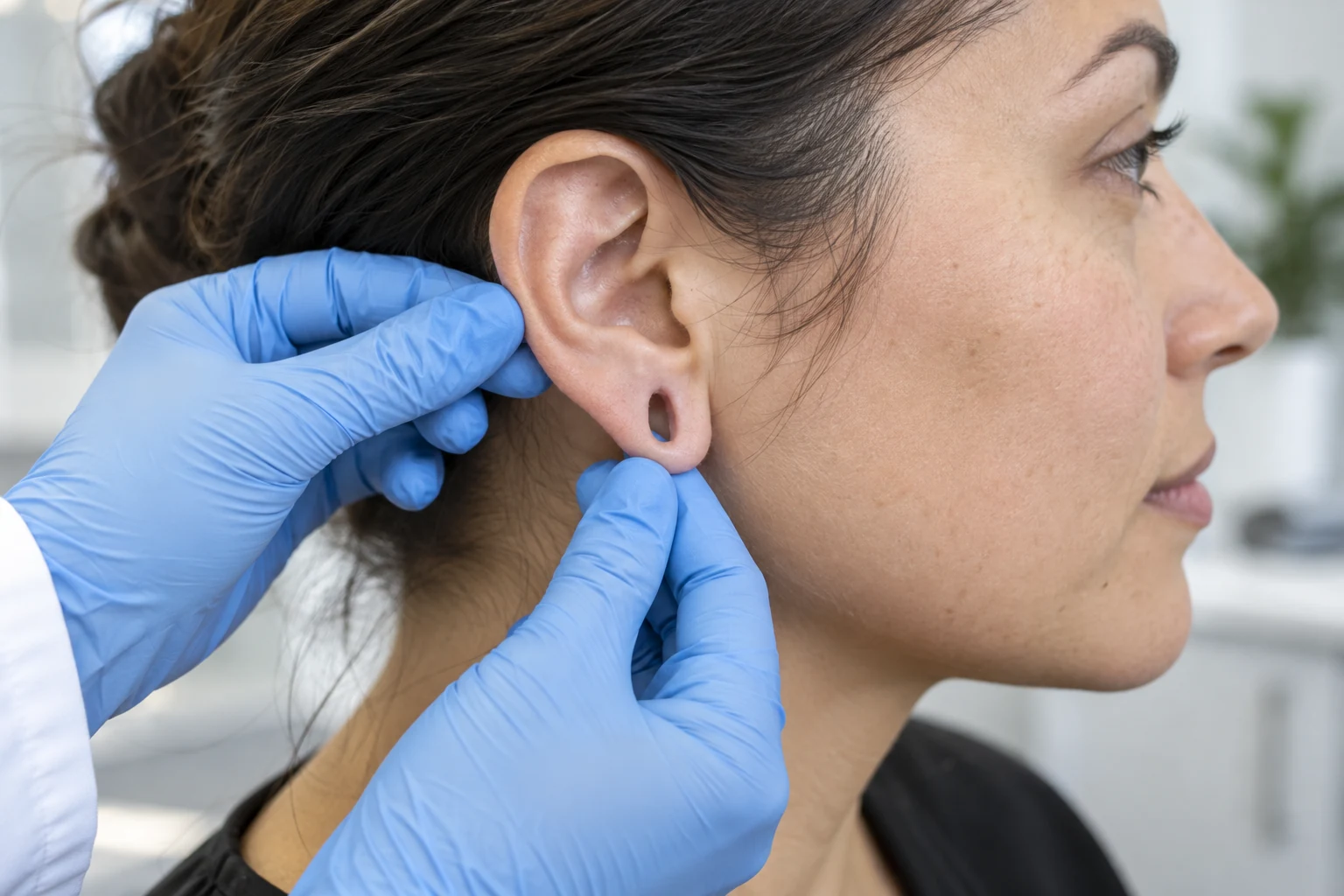
Large gauge openings can also leave extra or thinned tissue even if the diameter decreases. In those cases, simply closing the hole may not create the shape the patient wants. Repair may need to reduce excess tissue and recontour the lower border of the lobe. A consultation is the best way to distinguish an opening that may continue to contract from one that is likely to need surgical correction.
How Gauged Earlobe Repair Differs
A narrow elongated piercing and a widened lobe from a large gauge are not the same defect. With a smaller hole or split, a surgeon may remove the healed edges of the tract and bring healthy tissue together with fine sutures. A larger opening may require additional tissue removal and rearrangement to reduce the circumference, preserve available tissue, and rebuild a smoother contour.
The plan is individualized. Research on gauged earlobe reconstruction describes simpler closure for some smaller defects and more involved reshaping for larger, drooping lobes. That does not mean gauge size alone determines the operation. The amount, thickness, and position of the remaining tissue matter, as do the natural attachment of the lobe and the desired final size.
Removing gauge jewelry before the consultation can allow the tissue to contract and gives the surgeon a clearer view of the stable defect. Ask the office how long they want jewelry left out before an examination or repair; recommendations vary with the lobe and planned technique.
What Happens During an Earlobe Repair Consultation?
The examination is both medical and visual. The clinician may assess:
- whether the tear is partial, complete, or associated with missing tissue;
- the width of a stretched opening and the thickness of the lower lobe;
- scar tissue, asymmetry, notching, and the lobe’s attachment to the face;
- signs of irritation or infection;
- your history of raised scars or keloids;
- medications, supplements, nicotine use, and conditions that may affect healing; and
- whether you hope to wear conventional earrings again.
Bring up both ears even if only one is damaged. The goal is a balanced appearance, but natural earlobes are not perfectly identical. The consultation should also cover the expected scar and any limits created by thin or missing tissue.
How Earlobe Repair Is Performed
Earlobe repair is generally an outpatient procedure performed with local anesthesia. After the area is cleaned and numbed, the surgeon creates fresh tissue edges by removing the healed skin lining or scarred margin. The tissue is then reshaped as needed and closed with small sutures. More extensive gauge-related widening may call for a different incision pattern or tissue rearrangement than a straightforward split.
Because technique varies, an online description cannot predict exactly where your incisions will be or how long the procedure will take. The surgeon should explain the proposed pattern after examining the lobe.
Recovery, Sutures, and Scar Care
Mild soreness, swelling, or bruising can occur during the first several days. PS Dermatology’s current guidance notes that removable sutures are usually taken out in 5 to 7 days, although the schedule and wound care instructions are specific to the repair. The incision can look pink while the scar matures over the following weeks and months.
Follow the practice’s instructions about cleaning, ointment, showering, sleep position, exercise, and scar care. Protect the repair from pulling and pressure. Call the office if you develop increasing pain, spreading redness, drainage, fever, worsening swelling, or another change that does not match the recovery plan.
Possible complications include bleeding, infection, numbness or sensitivity, visible scarring, pigment change, asymmetry, contour irregularity, notching, and the lobe stretching or tearing again. If you have formed keloids after piercings or other injuries, discuss that before surgery because it may change the risk conversation and follow-up plan.
Can You Pierce Your Ears Again After Repair?
Many people can have a new piercing after the lobe has fully healed and the surgeon has cleared it. The timing is not the same for everyone. PS Dermatology advises waiting until full healing—typically a few months—and placing the new piercing slightly to one side of the repaired line rather than directly through the scar.
Once a new piercing has healed, lighter earrings reduce stress on the tissue. Avoid placing a new hole too close to the lower edge, and be cautious with tight backs, large hoops, and heavy styles that can pull on the lobe.
When a Fresh Tear Needs Prompt Medical Care
A chronic split or stretched piercing is usually evaluated as a planned repair. A fresh injury is different. Apply gentle pressure with clean gauze if the area is bleeding, and seek prompt medical care for bleeding that will not stop, a deep or contaminated wound, significant tissue loss, severe pain, signs of infection, or an injury that extends into the cartilage. Do not try to glue or stitch the earlobe at home. Timely evaluation can help determine whether immediate wound repair, cleaning, tetanus guidance, or later reconstruction is appropriate.
Frequently Asked Questions
Can a partially torn earlobe be repaired before it splits?
Yes. A long, thinning piercing can be evaluated before it tears through completely. The repair plan depends on the remaining tissue and the position of the opening.
Are stretched earlobes from large gauges repairable?
Often, yes. Larger gauge defects may require both closure and reshaping because the lobe can have excess, thinned, or drooping tissue. An in-person exam determines what can be preserved and what contour is realistic.
Will earlobe repair leave a scar?
Any incision produces a scar. Surgeons plan the closure to support a natural contour and make the scar as discreet as possible, but scar color and thickness vary by person.
Can both earlobes be repaired at the same visit?
They often can be addressed together, but that depends on the complexity of each side, your health, and the surgeon’s recommendation.
How much does earlobe repair cost?
Cost varies with each patient. The office can provide a practice-specific estimate after evaluating the issue and treatment plan.
Schedule an Earlobe Repair Consultation in Bridgewater, NJ
If a piercing has stretched into a slit, an earlobe has torn, or large gauges have left openings that no longer fit your goals, PS Dermatology and Surgery can evaluate the remaining tissue and explain your repair options. Schedule a consultation online in Bridgewater, NJ, or call 732-443-3975.
This article is for general education and is not a diagnosis or a substitute for an in-person medical evaluation. Follow the individualized instructions provided by your treating clinician.
Sources
- PS Dermatology and Surgery: Earlobe Repair in Bridgewater, NJ
- Cleveland Clinic: Earlobe Repair—Surgery for Split, Torn, and Stretched Piercings
- American Society of Plastic Surgeons: A Simple Solution to Torn and Stretched Earlobes
- Williams et al.: Repair of Gauged Earlobes—Case Series and Review of Two Techniques According to Size
Ready to talk with a dermatologist?
Schedule a visit with our team at PS Dermatology and Surgery in Bridgewater, NJ - serving patients throughout Central New Jersey.