

Medical Dermatology
Rhinophyma vs. Rosacea: Early Signs, Myths, and Treatment
TL;DR: Rhinophyma is progressive thickening and enlargement of the skin of the nose, usually associated with rosacea. It is not caused by alcohol. Medication may help active inflammation or early progression, while established excess tissue often requires procedural reshaping after an in-person evaluation.
A nose that flushes easily is not necessarily developing rhinophyma. Rhinophyma is a specific form of progressive skin thickening—usually associated with rosacea—that changes the texture and contour of the nose. Early changes can be subtle, while established rhinophyma may produce enlarged pores, an irregular surface, and a more bulbous shape.
Recognizing that distinction matters because rosacea inflammation and fixed tissue overgrowth are treated differently. A dermatologist can determine whether a change is rhinophyma, another feature of rosacea, or a separate skin condition and explain which options fit the stage of the problem.
What Is Rhinophyma?
Rhinophyma (pronounced rye-no-FYE-muh) is a phymatous change that most often affects the nose. “Phyma” refers to thickening and enlargement of skin. With rhinophyma, oil glands and connective tissue become enlarged, pores appear more prominent, and the surface and outline of the nose can gradually become uneven.
Rhinophyma is associated with rosacea, but it is not simply a severe episode of facial redness. Rosacea can cause flushing, persistent color change, visible blood vessels, bumps, eye irritation, and skin sensitivity without ever causing tissue overgrowth. Rhinophyma describes the thickening and contour change itself.
Early Signs of Rhinophyma
Early rhinophyma may look more like a change in texture than an obviously enlarged nose. Signs worth discussing with a dermatologist include:
- pores on the nose becoming larger or more noticeable;
- skin that feels thicker, firmer, or uneven;
- new bumps, ridges, or a pebbled surface;
- persistent redness or visible small blood vessels;
- increased oiliness on the nose;
- gradual widening or rounding of the tip or sides of the nose; and
- asymmetry or loss of the nose’s previous contour.
The change usually develops over time. Photographs taken months or years apart can make progression easier to recognize than checking the mirror every day. Bring older photographs to the appointment if you have noticed a gradual difference.
Rhinophyma vs. Rosacea: What Is the Difference?
Rosacea is a chronic inflammatory condition with several possible patterns. Some people mainly have flushing and persistent redness. Others develop acne-like bumps, visible vessels, eye symptoms, or sensitive skin. Rhinophyma is one possible phymatous manifestation, and many people with rosacea never develop it.
The distinction also affects treatment. Medication and trigger management may reduce inflammatory rosacea activity. Once substantial excess tissue and fixed contour change have formed, medication generally cannot remove that existing bulk. A procedure may be needed to reshape the tissue, while ongoing rosacea care addresses inflammation and the possibility of future change.
Does Alcohol Cause Rhinophyma?
No. Rhinophyma has historically been associated with heavy drinking in popular culture, but alcohol does not cause the condition. People who never drink can develop rhinophyma, and most people who drink do not develop it.
Alcohol can trigger flushing in some people with rosacea, which may have helped create the misconception. A trigger that temporarily worsens redness is not the same as the underlying cause of progressive skin thickening. Avoiding stigmatizing assumptions is important; rhinophyma is a medical condition, not evidence of someone’s drinking habits.
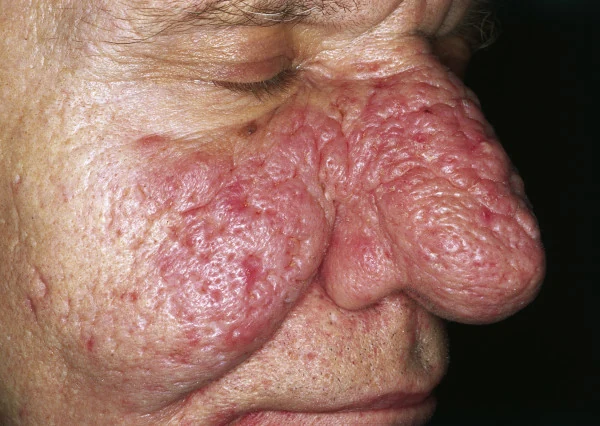
Clinical image credit: Michael Sand, Daniel Sand, Christina Thrandorf, Volker Paech, Peter Altmeyer, and Falk G. Bechara, via Wikimedia Commons, licensed under CC BY 2.5. No changes made.

Why an Examination Matters
Not every red, oily, bumpy, or enlarged nose is rhinophyma. Acne, sebaceous-gland growths, chronic sun damage, scarring, infection, and other skin conditions can change the nose’s surface. A new focal bump, ulcer, area that bleeds, or one-sided change should not be assumed to be “just rosacea.”
A dermatologist like Dr. Parth Patel, usually starts with a medical history and close skin examination. The clinician may ask how quickly the change developed, whether it is painful or bleeding, what rosacea symptoms you have, which treatments you have tried, and what medications you take. A biopsy is not required for every patient, but it may be recommended when the appearance is unusual or another diagnosis needs to be excluded.
Why Earlier Evaluation Can Help
The American Academy of Dermatology advises seeing a dermatologist when firm bumps or thickening develop. During an earlier, actively inflamed phase, prescription treatment may help control inflammation or slow further thickening in selected patients. As tissue becomes more fibrotic and the contour change becomes fixed, treatment usually becomes more procedural.
Advanced tissue overgrowth can also narrow the nasal openings and interfere with airflow. Even without a breathing problem, a changing nose can affect comfort, shaving, eyeglass fit, and self-confidence. Those are legitimate reasons to request an evaluation.
How Is Rhinophyma Treated?
Treatment depends on whether the main issue is active inflammation, established excess tissue, surface irregularity, or a combination.
Medical management
A dermatologist such as Dr. Parth Patel may recommend rosacea-directed skin care, sun protection, trigger management, and prescription medication for active inflammation. Certain oral medicines may be considered in selected early cases. These treatments can help manage rosacea activity, but they should not be expected to erase established thickened tissue.
Procedural reshaping
Procedural options can include surgical removal or shaving of excess tissue, CO2 laser resurfacing, electrosurgery or radiofrequency, and dermabrasion. Each method removes or refines tissue in a different way. The choice depends on the thickness and location of the overgrowth, bleeding control, the desired contour, the clinician’s experience, and the patient’s health and healing risks.
PS Dermatology’s rhinophyma treatment approach combines surgical contouring, CO2 laser technology, and dermabrasion when appropriate. Surgical contouring reduces excess bulk, the laser can assist with controlled tissue removal and surface refinement, and dermabrasion can help blend and smooth treated areas. The exact combination is chosen after an examination rather than applied as a standard formula.
What Recovery May Involve
Recovery varies with the depth and extent of treatment. Redness, swelling, tenderness, crusting, and a moist or weeping surface can occur while new skin forms. The treated area may initially look more noticeable than expected before it settles and continues to remodel.
Your care plan may include gentle cleansing, ointment, dressings, limits on certain activities, and strict sun protection. Do not pick at crusts or substitute a generic laser-recovery routine for the instructions provided by the treating clinician. Contact the office for increasing pain, fever, spreading redness, foul drainage, uncontrolled bleeding, or another change that falls outside the expected plan.
Potential risks include bleeding, infection, scarring, delayed healing, lighter or darker pigmentation, persistent redness, contour irregularity, and recurrence. Skin type, the amount of tissue treated, medical history, smoking or nicotine use, medications, and aftercare can all affect healing.
Can Rhinophyma Return After Treatment?
Treatment removes or reshapes existing excess tissue; it does not eliminate the underlying tendency toward rosacea or phymatous change. Regrowth can occur. Ongoing dermatology follow-up, treatment of active rosacea when appropriate, gentle skin care, and sun protection may help maintain the result and identify new thickening early.
If you also have flushing, acne-like bumps, or eye irritation, make sure the treatment plan addresses those symptoms separately. The practice’s rosacea information explains how this broader condition can affect the skin and eyes.
Questions to Ask your Rhinophyma Consultant, Dr. Parth Patel
- Does this look like active inflammation, fixed tissue overgrowth, or both?
- Is a biopsy or another test needed to rule out a different condition?
- Could medication still help at this stage?
- Which contouring methods would you consider, and why?
- What wound care and downtime should I plan for?
- How might my skin type and medical history affect healing or pigment change?
- What improvement is realistic, and what may not change?
- How will we manage rosacea and monitor for recurrence afterward?
Frequently Asked Questions
Is every bulbous or red nose rhinophyma?
No. Redness and nasal enlargement have several possible causes. A dermatologist can evaluate the pattern and determine whether testing is appropriate.
Can women develop rhinophyma?
Yes. It is more common in men, but women can develop phymatous rosacea and should have progressive thickening evaluated.
Can creams reverse rhinophyma?
Medication may help control inflammation or slow early progression in selected patients, but creams do not remove substantial established tissue overgrowth. Fixed changes often require a procedure.
Is rhinophyma dangerous?
Rhinophyma is generally benign, but advanced tissue growth can affect nasal airflow, and other conditions can resemble or be hidden within irregular tissue. New bleeding, ulceration, rapid change, pain, or a focal growth deserves prompt evaluation.
Is treatment only cosmetic?
Treatment often addresses appearance and confidence, but it can also improve hygiene, comfort, eyeglass fit, or airflow when tissue has become bulky. Insurance coverage varies by plan and medical circumstances and should be confirmed directly.
Schedule a Rhinophyma Evaluation in Bridgewater, NJ
If the texture or shape of your nose is gradually changing, an examination can clarify whether the cause is rhinophyma and whether medical treatment, procedural reshaping, or monitoring makes sense. Schedule a consultation with PS Dermatology and Surgery in Bridgewater, NJ, or call 732-443-3975.
This article provides general education and is not a diagnosis or a substitute for individualized medical advice. Treatment and recovery depend on an in-person evaluation.
Sources
Ready to talk with a dermatologist?
Schedule a visit with our team at PS Dermatology and Surgery in Bridgewater, NJ - serving patients throughout Central New Jersey.